MAKING THE RIGHT CHOICE

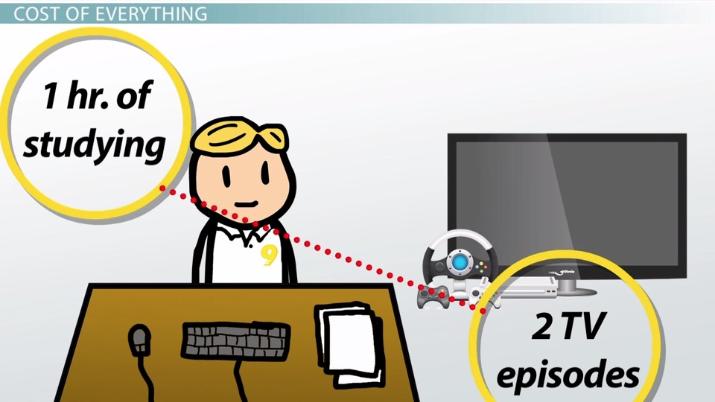
All through life, one thing is certain: there will always be choices to be made as different opportunities arise, offering options and alternatives. An economic concept that readily comes to mind that serves as a guide to decision-making is that of OPPORTUNITY COST. In simple terms, opportunity cost can be described as the value that a person forfeits by choosing one course of action over another. It usually involves both time and money and is present for every decision that is made. Alternatives and options are always present, and it is important to weigh the opportunity cost in making decisions. e.g., I was privy to the decision of a mother to finance her son’s university education abroad at the cost of purchasing a property in a prime location in her country. It was a choice based on her priority, after consideration of the opportunity cost of either option.

I was recently invited to mediate in a conversation between Mr. Babalola and his son, Derrick. Derrick had recently completed his National Youth Service, and his father, who ran a grocery store, had offered him the opportunity to manage the business with the promise of accommodation and a car attached to the offer. Derrick, however, had his sights set elsewhere. He had recently attended an Interview with a Multinational Tech company and was certain he would get the position of a Management Trainee. Though he would have to relocate to another city, the offer would provide him with the opportunity of extensive training and travel. It would, however, mean that Derrick would have to share a rented apartment with a friend and commute to and from work by public transport. The father prevailed on him to weigh the opportunity cost of rejecting his offer, especially in the light of succession to the business.

Derrick weighed the opportunity costs and decided that the opportunity cost of passing up an offer with that multinational corporation was, to say the least, “humongous.” He knew so many of his peers who would give anything for such an opportunity. He projected that the training and experience to be gleaned would catapult him into a league in corporate dynamics, far beyond the management of his father’s retail business, and he was ready to forego the immediate attraction of comfort for the perceived long-term gains. Besides, he opined, the training, experience, and network gained would be of futuristic benefit to his father’s business if he decided to return to it in the future. Following up, Derrick got the offer letter and moved on with his decision.

The importance of discussions like this, especially with teenagers and young adults, cannot be understated. Every day, choices are made, and options need to be weighed carefully in relation to one’s objectives. The opportunity cost of a choice is what is lost by not going with the alternative. I have seen some interesting choices made where a mother would rather owe on school fees and use the money for aso-ebi to the detriment of the child who was kicked out of school for default in fees. Also, the choice of material possessions over qualitative education.” After all, a school is a school, quality of education notwithstanding,” some would say.

I recall my discussion with a young man who said that when he gained admission to the university, his father never lectured him against joining cults but merely pointed out the opportunity cost of cultism versus concentrating on his studies, and that nailed it for him. He could be a cultist gaining popularity and notoriety, with the likely outcome of rustication, or face his studies squarely and achieve recognition through outstanding success, which opens doors for mouth-watering opportunities.

It is my prayer that we exhibit wisdom in our choices and teach the coming generations how to weigh their choices to enable them to make the right choices.

Love

Havilah

Exercise: Hype or Reality?

One bright morning in April, Odun and Zubaida were out walking the sidewalks of their housing estate for their 45-minute daily ritual, which offered them the opportunity of discovering developments within the estate while exchanging light gossip and banter. Did you hear about what happened to Tunde?” Zubaida began.” I was told he collapsed while climbing the stairs to his office yesterday and had to be rushed to the hospital. He has since stabilised and has been placed on a dietary and exercise regimen to wean him back to health and wellness.” Remember, he would always sneer at us while cruising around in his air-conditioned car and asking…Why do you ladies choose to suffer? After all, you both have a good build, no weight loss is needed…you look perfect. All our attempts to enlighten him on the benefits of exercise and that he should view exercise as a necessary activity for wellness and health, fell on deaf ears. It is all HYPE! Was his quick response. Unfortunately, he had to learn the importance and benefits of exercise the hard way. Yet, as they pounded the sidewalk with intermittent jogs, they found themselves pondering a timely question: Are the benefits of exercise mere hype, or do they hold up to scrutiny as reality?

In recent decades, exercise has emerged as something of a cultural panacea. Social media brims with testimonials about how running, swimming, or yoga has transformed lives. The market for wearable fitness technology and dietary supplements flourishes, fuelled by the persistent promise that movement is a gateway to a better, longer, happier life.

Odun recounted an article they had seen just last week: “Exercise can erase stress, sharpen memory, and even make you happier than money,” it declared. An ever-skeptical Zainab, responded bemused, “Is it really that simple? Can a thirty-minute jog do all that?”

Scientific studies consistently show that regular physical activity lowers the risk of chronic illnesses such as heart disease, Type 2 diabetes, and certain cancers. Cardiovascular endurance increases when the heart is challenged by aerobic activity, as does lung capacity and muscular strength. Yet, for all its proven effects, exercise is not a magic bullet, as moderation is required to prevent fatigue and injury. While moderate, regular exercise does appear to enhance immune function, reducing the risk of common illnesses like colds. However, excessive, or strenuous exercise may temporarily suppress immunity, making athletes more susceptible during periods of overexertion. Balance—rather than extremes—is key.

Physical activity is known to stimulate the release of neurotransmitters that can elevate mood and reduce anxiety. In fact, exercise is often recommended as part of therapeutic regimens for mild to moderate depression and anxiety disorders. However, though exercise can be a powerful tool for emotional regulation and stress management, it is not a cure-all.

Does exercise truly extend life? Studies suggest that physically active individuals live, on average, longer than sedentary counterparts. The difference can be several years, even after factoring in variables such as diet, genetics, and socioeconomic status. More striking, though, is the quality of those years: Regular movement preserves mobility, cognitive function, and independence well into old age. However, to be effective, it must be woven into a holistic lifestyle—combined with sound nutrition, restorative sleep, and supportive relationships.

The World Health Organization suggests at least 150 minutes of moderate-intensity aerobic exercise weekly for adults, alongside muscle-strengthening tasks. But even smaller doses—taking the stairs, dancing in the kitchen, or gardening—can be beneficial.

The benefits of exercise are real—rooted in science, echoed in lived experience—but not without limitations. The hype, while inspiring, sometimes distorts expectations. Movement can strengthen the heart, lift the spirit, forge friendships, and enrich life, but it is no panacea. The reality is both simpler and richer: Exercise is a tool, not a miracle; a celebration of what the body can do, not a guarantee of perfection.

In the end, the greatest benefit may lie not in the promises or the advertisements, but in the simple joy of moving side by side, step by step, beneath an ever-changing sky.

Love

Havilah

THE RAINS ARE HERE AGAIN

As I took one of my “ walks,” I happened upon one of my favorite street sweepers, and after our usual exchange of pleasantries, she pointed out a package of neatly packed and tied garbage with complaints that someone had dropped their garbage by the roadside. Incidentally, these were non-biodegradable garbage. Immediately, my mind went to the recent spate of floods across the country, much of which is traceable to blocked drainage and the fact that people have refused to learn and teach how to responsibly dispose of garbage.

My mind switched to some years back when I was teaching Sunday school/children’s church, and how I would always hound the children for dropping biscuit and sweet wrappers on the floor when the dustbins and garbage bins were provided for their use. This training and retraining continued, but there was a family of three siblings who I observed NEVER littered the floor. They so impressed me that one day, I engaged their mother to find out how she had managed to discipline them in that regard. The experience is worth sharing.

Mummy Shayo, as she was fondly addressed, gave a coy smile and spoke. “Uhm…we learnt to do the right thing the hard way. We had never really been mindful of littering the streets or other public spaces, but one day, the family was driving back from an interstate visit to my parents and had consumed a large quantity of bananas given to us during the visit. Suddenly, my husband looked back and saw the car floor littered with banana peels, so he instructed that they be thrown out of the window. Lashe, the youngest, decided to throw them out of his side and they landed smack in the middle of the road at a time the vehicle behind us had negotiated to overtake us. His rear wheels slid over the peels and caused a spin, whereby he brushed our car. Needless to say, we had to apologise and fix the minor repairs on both his car and ours, which was a hard lesson we learnt for our heedlessness…never to litter the road. Thereafter, it became easy to apply the lesson learnt to all facets of litter, and the children were made to not just clean up, but serve some punishment whenever they littered anywhere, be it at home or outside the home. It has since become ingrained, and even where they cannot find a bin, they would keep the garbage with them until they locate a bin to dislodge the items.”

It is never too early nor too late to teach children the value of a neat environment and prevent the disaster associated with untidy and dirty environments. If we all keep our spaces and environment clean and tidy, it translates to the larger society. Recently, someone asked what the street sweepers would do, as he felt they would be out of a job. My tart response was that they sweep the streets and keep sand and silt from building up, not waste and garbage. Let us learn to keep our environments clean and prevent health issues, accidents, and other hazards. The saying goes, “A cluttered desk is a sign of a cluttered mind.” In other words, physical clutter can contribute to or reflect an unfocused or cluttered mind, eliminating peace and calmness.

LET US JOIN HANDS TOGETHER TO TRAIN AND RETRAIN THE POPULACE ON THE IMPORTANCE OF ENVIRONMENTAL NEATNESS AND CLEANLINESS.

Love

Havilah

THE GREEN-EYED MONSTER

Cyril was one of those young, suave, upwardly mobile executives who frequently visited the University campus close to his residence, in search of a suitable “wife material.” During one of such visits, he met Vera as she took a break from her research in the library and headed to her hostel in search of a snack. Cyril was swayed by her beauty and calmness as she chatted with Shalewa, her roommate. Cyril approached her, pretending he intended to request her services in checking on a girlfriend whose number he had lost. As he tried so hard to describe his imaginary friend whom he named Bella, it suddenly dawned on Vera that there was no Bella, and she could not contain her amusement as she chirped brightly,” You sure got me there.” The ice was broken, and in no time, their relationship blossomed, and it was agreed that immediately after her graduation, the marriage would take place.

Two and a half years later, they were married, and Cyril proved to be the typical Alpha male. He was successful in his career and proudly played the part of breadwinner. He left no stone unturned to fund their lifestyle while dictating everything that needed to be done. Vera, on her part, was glad to cede all responsibility to him, especially since the disparity in their incomes was huge. However, with time, Vera landed a job with a multinational company and was earning hard currency. Her job took her around the globe, and she became increasingly relevant in her field. The green-eyed monster started creeping into the relationship as Cyril found himself losing grip. She could afford things, and even when she deferred to him on issues, he counted her as condescending. She was no longer his sweet, naïve Vera who waited at his beck and call for instructions. She was certainly more visible in social circles, and when they attended functions, greater attention was paid to her. It made him feel emasculated, and even though she tried so hard to make him feel desired, relevant, and wanted, his ego always got in the way. With the increased friction at home, Vera paid even greater attention to her career, and it was a no-brainer that Cyril started harboring suspicions that his wife was having relationships in and around her workspace. How else could she have risen so rapidly at work? Was she the only one who could swing the deals she cornered? How was she achieving so much and doing so well? He doubted that it was merely by effort and God’s favour. Yes, she was ardent about her faith and prayerfully managed her responsibilities, but then…

He decided he would burst her bubble, and as Vera returned from a phenomenally successful tour of her sub-region, he told her she would have to quit her job and that he could afford to take care of all the needs of the home. He insisted that if she needed to work, she could get a job that would keep her at home and less visible. Vera was stunned as she could not believe he would do such a thing. How could he? She was at the prime of her career, and life was interesting. It certainly did not make sense to resign now. She, however, cherished her status as a married woman because it put some of her male admirers in check, and she wanted it to stay that way. She could not believe that the madam “fix it” at work was now at her wits’ end on how to manage this situation.

If Vera sought your advice, what would you say? Havilah would be glad to read from you, proposed solutions on this thorny issue. I am all ears, or should I say – eyes.

Love

Havilah