CAN KAMALA HARRIS BE THE DEBORAH OF OUR TIME?

As the world watches the USA elections with unabated interest, I cannot but wonder how many of us kept awake all night, following the elections. Undoubtedly, this is one election that has generated so much interest around the globe primarily for three reasons:

  1. When Big Brother (the USA) sneezes, the rest of the world catches a cold. Undoubtedly the policies crafted in the United States have a tremendous impact on other countries with ripple effects experienced worldwide. Consequently, everyone is on their seat’s edge, eager to know how things will shape out.
  2. This is probably the most keenly contested race in the history of the United States and the polls rate them at par. It is therefore anyone’s guess as to who emerges as the next President.
  3. If Kamala Harris wins, she will be making history as the FIRST Female President of the United States of America – a monumental win. I dare say, that even if she loses, her courage should be commended, and she would be the second woman to contest and lose in the USA.

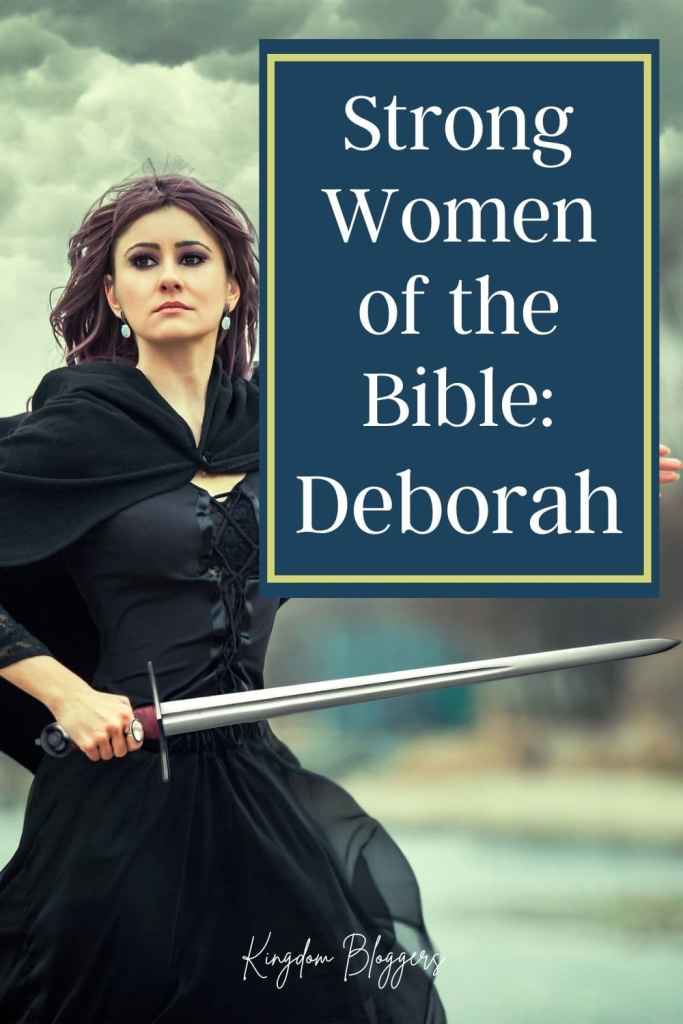
While following the elections, my mind played back to a conversation I had with a friend about two decades ago regarding the appropriateness of women for Leadership roles. He believed that women are not cut out to face the pressures of Leadership and that they were created to assist the men with their roles. They could deputise or assist but not lead. After a heated debate, we called a truce as my arguments seemed lost on him. I still hold strongly to my view that even in biblical times, there is the record of a female leader – the only record – but it proves that God is not averse to women in leadership roles. That woman was DEBORAH.

The Bible records that at the time when Judges ruled Israel before they cried out to God for a King like other nations, there was a female Judge and Prophetess called Deborah. She ruled at a time when Israel was under oppression by the Canaanites for twenty years. As a judge, she adjudicated on matters brought to her for settlement and exercised wisdom and knowledge from her relationship with God, in settling disputes. However, she felt compassion for her people and interceded with God for her people. She heard from God and obeyed the instruction to engage the Canaanites in battle. She then sent for the Military Leader – Barak and instructed that he prepare his men for war. Barak feared the Canaanites and insisted he would only go to war if Deborah went with them. She did and prophesied that the victory would lie in the hands of a woman. Israel defeated the Canaanites, and a womancalled Jael, lured and killed the King of the Canaanites. Clearly, Deborah exhibited laudable leadership traits and was rewarded with forty years of peace for the Israelites.

Deborah was visionary – She foresaw challenges and opportunities and crafted plans to achieve positive results.

She was approachable as people sought her out for justice.

She displayed wisdom and knowledge in the dispensation of justice.

She was sensitive in the spirit and obeyed God’s instructions and directions.

She was courageous and confident and did what needed to be done. If the army needed her to go to war, she was not afraid.

She did the needful to achieve the desired results. She worked as a team leader, driving and encouraging the members to achieve the desired goal.

In a world in which men dominate Leadership positions, it appears to be an uphill task for women to break through the ranks of Leadership, but we are not giving up.

Love

Havilah

CHILDREN AND MORAL DEPRAVATION

I was invited to felicitate with Binta at her granddaughter’s child dedication and as I saw the proud parents making the rounds of greetings, I rejoiced with them for the bundle of joy. However, I pondered how ready they were for raising a child in today’s world.

In the past, parents were primarily concerned with education, food, shelter, clothing, proper upbringings, religious affiliation, and protection from external aggression including sexual predators. Today, however, there is the additional concern of protecting the sanctity of our children in a morally depraved world or as a friend put it, a morally bankrupt world. As my thoughts drifted away from my immediate surroundings, my attention was caught by a nearby scene. An elderly lady had sent a young child to a nearby supermarket for wrapping paper and the child had returned with the wrapping paper and promptly pocketed the change without recourse to the sender. The lady berated the child on his actions, but he remained unremorseful and returned the change to her grudgingly. When interrogated about his action, he justified it by saying, it was his just compensation for running the errand and she could afford it anyway.

My thoughts switched back to the challenges of the digital age for proper upbringing. As parents get busier with providing the essentials in an inflationary economy, they must not lose sight of the mentoring and training process for the children if they are to be useful to themselves, their families, and society at large. How will children be protected from themselves with so much access to pornographic sites on screens—phones, tablets, personal computers, television screens, etc.? Another thorny matter is the emergence of gender identity issues which has been cascaded to children’s TV programs and movies. Exposure to the role of influencers in social media and various uncensored content creators, further places children at risk of imbibing the wrong values.

This calls into question the right age for exposure to phones, laptops, and tablets. Can their use be properly censored to prevent abuse? What of peer influence and its attendant effects? The questions are myriad, but our 21st-century parents must take these matters seriously as they navigate the digital era. I believe gadgets will have to be considered on a need-to-have basis and cannot be dependent on peer influence. Parents will also have to devise means of monitoring their children’s exposure to content especially what may be considered damaging to their development.

Undoubtedly, religious bodies also have a role to play even as worship and other programmes have developed an online presence. The right doctrines must be taught, and children brought up in the way of the Lord. Above all, parents must not neglect the place of prayer in the lives of their children and must expose them to it from an early age. May the Lord grant parents, grandparents, and all who care for children, the wisdom to navigate these times and help them raise children who are worthy of emulation.

Love

Havilah

THE PROCREATION CHALLENGE

Jokotade was full of excitement as preparations were in full gear for the naming ceremony of her precious jewel who was fast asleep in her crib in the next room. As she hurriedly ticked off her to-do list, while keeping her ears open for the slightest sound from the next room, she secretly thanked God for answering prayers in gifting her with a girl for her first child.

Just then, the front door opened and Detola (her favorite cousin) swayed in from work with a bag of baby clothes for her niece who she had already named Morenikeji. As she exchanged pleasantries with Jokotade, they heard Jokotade‘s mum’s voice ring out from the kitchen.    “Joko, it is good to see you as always. You always have your sister’s back. I am sure you have brought more things for your niece. Well done. I hope the day was not too stressful. But Detola, when will you give Dimeji a baby sister? Your son is already five or is it six years old? What are you waiting for?” Detola walked up to Aunty and gave her a wry smile. She had been under so much pressure lately from all quarters, on this subject matter.

“Aunty dearest (she replied). I am awaiting your retirement from work first so that I am assured of an experienced baby carer/sitter. You know your sister does not have the time either. On a more serious note”, she continued, as she dragged a seat,” I will give you four simple reasons why that is not a priority Aunty:

  1. I got married in my mid-thirties and had a difficult pregnancy with Dimeji.
  2. The prevailing economic climate does not encourage bearing many children. One must be mindful of pocket as living expenses and education do not come cheap.
  3. At forty, my energy levels are much reduced. I am not sure I can manage the sleepless nights, and the toll child-rearing takes.
  4. There is a dearth of capable assistance. Trusted nannies and home help are fast on the decline and our mothers are still pretty much actively engaged. To whom do we entrust the babies? Thank God for CCTVs, we can see records of what some of these home assistants get up to with children entrusted to their care.
  5. I have a boss who constantly asks whether children can be used as loan collateral. Undoubtedly, they make one feel fulfilled in marriage but, one must exercise prudence in knowing the number one can reasonably manage. “

Jokotade’s views are representative of the younger generation’s perspective on having children. However, I believe that you do not have a one-cap-fits-all solution. The Bible encourages us to “be fruitful and multiply” but one must apply wisdom and prudence. Some rumination must be done putting the following into perspective –

  1. Your motivation for children. Is it to satisfy the world, to show them off, etc?
  2. How do you wish to be identified? A physical mother or would you be satisfied with spiritual children or as a mentor to many?
  3. You must understand your limitations and take cognisance of them, be they financial, time constraints, inadequate energy, or other resources.
  4. How will multiple children impact other relationships e.g. God, your spouse, work, etc?

I end this with a quote culled from PRACTICAL OUTWORKING by Amanda Peacock “Some women struggle with infertility and postpartum depression while others fall pregnant instantly sailing through pregnancy and motherhood. Some have multiple children and are not overwhelmed by it all. We are all different and our families, are different. Wise womanhood means knowing our motivation, identity, limitations, primary function as a wife, and most importantly that our God is sovereign over the good blessing of children.”

Love

Havilah

MACHISMO AND ERECTILE DYSFUNCTION

Characters Design Vector Art Illustration. A strong worker wears a hard hat and smiles and stands with one fist on his hip and unrolls a medieval paper scroll.

Banjo had always considered himself a “stud”  when it came to sexual activities and was proud of his prowess. Suddenly, at the age of fifty-four, he could no longer sustain an erection. Try as he could and with all the cooperation from his pretty and active wife Marilyn, he couldn’t keep it up. This caused him grave concern and he became increasingly possessive about his wife. He felt emasculated. The more he failed to meet his expectations, the more intolerant and abrasive he became, and he gradually slipped into alcohol abuse.

However, Marilyn understood his situation and would often assist and encourage him. As he became more depressed about his situation, she offered to accompany him in seeking medical attention and/or counseling. All her offers were rebuffed as Banjo preferred to blame her for the situation.

One Saturday, Banjo went over to Joe’s house to watch the World Cup finals. ( Joe was his seventy-year-old friend with whom he could unwind.) Banjo hit the vodka bottle with venom and by half-time, the bottle was three-quarters empty. As Joe moved the bottle away, he cautioned “Banjo, if you continue this way your life will be cut short. It appears something is eating at you!” While flailing his arms, Banjo blurted out “Of what use am I when I cannot satisfy my wife…I am impotent!” Joe, an older and more experienced man, having himself treated erectile dysfunction, allowed Banjo to vent and when he was calmer, he got into Banjo’s car and drove him home. The next day, he visited Banjo and after enlightening him about the condition and how he had handled and overcome it, he took him to see his doctor.

Erectile dysfunction is the inability to have or maintain an erection thereby preventing a man from having or finishing sexual intercourse. When this becomes a regular occurrence, men tend to become discomfited by it and may react in diverse ways based on their personality types. This condition is quite common especially in older men although men in their forties have been known to experience it. However, if effectively managed, the couple can enjoy satisfactory intercourse.

The treatment regimen proffered is usually determined by the cause of the condition, which is broadly classified as physical, psychological, or lifestyle choices. Examples of physical causes include diabetes, high blood pressure, stroke, sclerosis, prostate enlargement, chronic kidney disease, fatigue, and Parkinson’s as well as some of the associated treatments and medication.

Psychological causes vary and include depression, stress, anxiety, and relationship issues while Lifestyle choices include abuse of drugs, alcohol, and tobacco.

Treatment could therefore consist of any or a combination of the following:

  1. Medication to manage the underlying physical or psychological conditions.
  2. Counselling. This is advised for the couple as the partner has a part to play in the acceptability and the healing process. She needs to understand his concerns and show empathy and cooperation.
  3. Lifestyle changes e.g. weight watching, exercise, quitting smoking, alcohol and drug abuse, and stress management.
  4. Vacuum Constriction Devices (VCD).
  5. Surgery in instances of blockage.
  6. Alternative therapy through supplements and Herbal Remedies.

It is however important that where ED(erectile dysfunction) is suspected, a doctor’s physical and laboratory examinations will be required to make a diagnosis and enable effectual treatment.

Havilah advises that where the partners do not view it as an issue, there are other ways in which they can experience meaningful and satisfactory relationships but where it threatens to destabilise the relationship, help should be sought.

Love

Havilah

THE SCOURGE OF PASSION MURDERS

Edwina was a young, pretty and intelligent girl of nineteen, who passed her Secondary School Certificate with flying colours but could not continue her education as a result of a lack of sponsorship. Her parents were farmers in the village and Edwina was constrained to assist them in their palm oil trade. That December, Ikemefuna, a young man from their town who lived “in the abroad” as he was often described, came home (to the village) to celebrate Christmas and ran into Edwina who was running an errand for her father, it was love at first sight.

First, a few words about Ikemefuna: he was a young man in his late thirties who had left his town in search of greener pastures “in the abroad” some seven years before. He had done odd jobs, married a citizen, had a daughter, and had recently divorced his wife. He had come home for the Christmas celebrations with the primary motive of searching for a wife.  Immediately he set his eyes on Edwina, he decided…this is SHE! He proposed to her and shortly after the traditional marriage rites were performed and Edwina became Ikemefuna’s wife. However, in her naivety, Edwina omitted to inquire more deeply about her husband but was both excited at being married and more importantly, at the prospects of travel.

After about a year, all immigration formalities concluded, Edwina was able to join her husband who having recognised her promise, worked hard to sponsor her education. Edwina studied programming and ended up in one of the “Tech” companies where she quickly ascended the corporate ladder. She was earning mega dollars while Ikemefuna was still doing odd jobs to make a living for his family. Initially, Edwina would fund the joint account with Ikemefuna for the family’s expenses but after a while, her tastes and expectations were different, and she furnished a lavish lifestyle from a different personal account. All attempts to restrain Edwina and maintain his authority as head of his home which now comprised two sons and his daughter from the previous marriage, failed. He became emasculated and frustrated. He regretted the marriage and hated who she had become. He became depressed and was on anti-depressants until one day, he decided he would end it all.

As Edwina dressed up to attend an office event one evening, Ikemefuna approached her room and insisted that as her husband, he was demanding that she should not attend the event. Edwina merely laughed him in the face and dared him to stop her if he could. An enraged Ikemefuna calmly walked into his room, pulled out his gun, and shot her three times from behind. By the time the children rushed out of their rooms to find out what was happening, he had shot himself also. They found their mother and father on the ground with so much blood. They called for both the police and ambulance. The medics were able to resuscitate Ikemefuna, but Edwina was dead on arrival. Of course, Ikemefuna paid for his crime as he was sentenced to jail for premeditated murder and the children taken over by social welfare. Could this disaster have been avoided, I would say – YES.

Similar scenes appear to play out every day and it appears we never learn from them.

  1. Wisdom dictates dating for a while to have some background knowledge about an intended spouse and to better understand their character.
  2. Spouses should seek mutual improvement and upliftment and not rely on one partner to be the “sole” provider. It can be tedious.
  3. They should see themselves as equal partners in the relationship with each bringing something to the family relationship.
  4. They should submit one to another in love regardless of inequality in social status, income, or enlightenment.
  5. Where irreconcilable differences exist, it is preferable to have a separation or even divorce.
  6. Most importantly, the need to have God in the centre of a marriage must NEVER be overlooked and to seek Godly counsel when unsure.

May the Lord help our unions even as we lay them in His hands and grant us the patience to allow Him to handle things. Amen.

Love

Havilah

THIS DNA TEST?

Molly had recently lost her husband in tragic circumstances. He left home for work that morning in high spirits, hoping to sign a multi-dollar contract. En route to the client’s office, he was trapped in the lift. Unfortunately for him, he suffered an asthma attack and before help could reach him, he had suffocated. Molly had been beside herself with grief. The days ahead appeared hazy and she lived through each day like she was in a trance. Banji had been such a wonderful partner, and she struggled with thinking of him in the past tense. Memories of the good and not-so-good times crisscrossed her subconscious. How would she break the terrible news of their father to their twin boys – TeeTee and Kenny, who were due back from boarding school in a week? They worshipped their father. Molly shuddered at the thought of how the children would react, even as she relived her reaction when she was first informed.

A knock on the living room door roused her from her reverie as she gently whispered, “Please come in.” It was late evening and as she sat in the enveloping darkness, she had felt too drained to switch on the lights. She barely made out the form of a young lady accompanied by a young girl of about the age of ten. She quickly snapped on the light switch which was within reach and exchanged pleasantries with the visitors. After expressing her condolences, the lady summarily introduced herself as Ore, the mother of Banji’s daughter, Ibukun. A perplexed Molly muttered “Which Banji…daughter…I don’t understand” to which Ore responded with an instruction, “Ibukun, greet big mummy.” The shock and consternation were evident on her face, but she managed a wry smile and waved the little one to a seat. Drained emotionally, she adopted the mode of silence as she awaited the return of Banji’s sister, who had gone out to pick up a few confectionaries.

Ten minutes later, Oye (Banji’s sister) sauntered into the room and Molly did a brief introduction of Ibukun as Banji’s daughter. Oye laughed and responded “Molly, you were always a comedian. Cut out the joke…this is no time for jokes. Daughter hm, from where to where? I know my brother well.” After some discussion among the three women (having excused Ibukun to have some ice cream in the dining room, Molly persuaded Oye to allow Ibukun to participate in Banji’s funeral, subject to a DNA test to determine paternity, immediately after the funeral, to which Ore agreed.

After the funeral, Ore reneged on the promise to release Ibukun for the DNA test, insisting that it contravened her religious belief. Oye however insisted that for Ibukun to be absorbed into Banji’s family, the DNA test had to be done, and she volunteered to be matched since her brother had been buried. Moreso, she queried how the child could have been hidden for ten years with neither family (immediate or extended) nor friends aware. Ore’s reaction threw a poser “How are we even sure that your DNA matches your brother’s? Without making insinuations, I am being practical about this.” An enraged Oye mouthed a stream of expletives and stormed out of the house. She, however, later listened to the voice of reason that saw it as a logical argument.

The question of paternity is increasingly a topical one and women must be faithful to their partners and establish the paternity of their children in their father’s lifetime. This will facilitate acceptance and a sense of identity as family members become acquainted and bond with such children, regardless of the circumstances surrounding their conception. It behooves mothers to shield their children from the trauma that can be associated with questionable paternity.

Love

Havilah

THE ROLE MODEL

While listening to a radio advertisement about Superheroes I suddenly found myself comparing the attributes of superheroes against role models. Both exhibit self-awareness, empathy, humility, professionalism, and integrity but role models are often people who are familiar to you while superheroes are beings of miraculous fancy. Role models impact our lifestyles positively and inspire us to take affirmative action and accountability.

Faridah, an older cousin, told me this story about her daughter Bimpe…an incident that occurred decades ago. Bimpe, a brilliant and gifted child, was on the verge of transitioning to High School (secondary school) and was allowed to apply for a scholarship from a Multinational Corporation. At the qualifying examination, she was required to write an essay about her ROLE MODEL. At the end of the examination, the invigilator/examiner approached Faridah with a smile on her face and outstretched hand, she congratulated Faridah on the performance of Bunmi who had scored the highest in the examination. She also commended Faridah for being an impactful role model to her daughter. A perplexed Faridah enquired after the basis of such deduction and was told that Bimpe had written a wonderful piece, highlighting her mother’s qualities, attributes, and achievements, naming her as her ultimate role model. Faridah was wowed. She felt flattered but also curious to know why she had been chosen and what she had written that could have impressed the invigilator/examiner.

As soon as Bimpe was comfortably seated in the car, Faridah could no longer hide her curiosity and asked her daughter why she chose her as her role model, regardless of the many women and men whose laudable achievements are in the public space.

Bimpe’s response was concise but reassuring. “But Mom, you do so many things invaluable things in your quiet way. You are a silent achiever with sterling qualities that stand you above the crowd. You impact family, society, humanity and everywhere you find yourself. You are selfless and display humility and integrity. I doff my cap to your absolute brilliance. What better role model could there be? Mom, you remain MY role model for all time.” You cannot imagine the sense of fulfillment and pride my cousin felt and still feels anytime she recalls the incident!

As parents, uncles, aunts, mentors, and leaders…let us be intentional about impacting lives positively by the way we live, work, and relate to others. Our children mirror us. What positive values do we exhibit that are worthy of emulation? Let us remember that we all have leadership roles in different spheres of life be it home, work, family, place of worship, society, etc. How are we perceived and how are we impacting lives?

Many years ago, I worked for a renowned Legal Practitioner who exhibited brilliance, bravery, industry, resilience, forthrightness, and perseverance. He was a role model to me, and I imbibed a number of these qualities from him. His leadership style was impactful and influenced several younger lawyers who worked for him. Chief Gani Fawehinmi was a role model in his own right.

Love

Havilah

A TOAST TO WOMEN IN LEADERSHIP

The US presidential elections are fast approaching and there is so much analysis of the Kamala Harris vs Donald Trump debate where it is largely believed that Kamala trounced Donald. My thoughts were tuned to Kamala Harris and what her victory in the USA elections could portend. She obviously would not be the first woman to hold the reins of power as she has had role models at different times in the likes of Sirimavo Bandaranaike of Ceylon, Indira Gandhi of India, Margaret Thatcher of the United Kingdom, Golda Meir of Israel, Isabel Peron of Argentina and Benazir Bhutto of Pakistan, Angela Merkel of Germany and Ellen Johnson Sirleaf of Liberia, among others.

Over time, women have displayed a capacity to yield influence and power, competing favorably with their male counterparts in leadership positions in industry, nation, organisation, or nuclear cells. They have been able to harness their intuition and subtle persuasion to achieve desired outcomes. Undoubtedly, leadership styles differ but the ultimate is to achieve the desired objectives or goals. One cannot but marvel at the achievements of Queen Amina of Zaria who ruled in the mid-sixteenth century and the performance of Nancy Pelosi, former Speaker of the United States House of Representatives, since 2007 who fearlessly and passionately served her country.

Mention must be made of a few who have headed International Organisations such as the World Trade Organisation’s Ngozi Okonjo-Iweala and the International Monetary Fund’s Christine Lagarde. Recently, Nigeria has experienced a wave in which ten of its top banks are headed by women. This was seemingly impossible a couple of decades ago.

Back to Kamala. If she were to win this election, it would be a first in the history of the United States of America – a country referred to as “the most powerful country of the world” – a feat Hillary Clinton failed to achieve. The question that niggles at me is whether the USA is ready for a female President, particularly one of colour. Will they rise above prejudice this time around? I guess, time will tell as we await the outcome of the electoral process. Nevertheless, it is elating to know that Kamala could win the Democratic ticket, evidence enough that her colleagues have confidence in her leadership ability.

Her win will further serve as an encouragement to all females in all parts of the world that they are as competent and qualified as their male counterparts to aspire to the highest office in their environment.

This piece serves as a toast to all women who have over time achieved leadership positions, in whatever role they find themselves in!

Love

Havilah

INFERTILITY CONCERNS

Feranmi and Deroju met at a renowned fertility clinic and while waiting for the general introductory address, they decided to trade stories. Feranmi, a petite thirty-five-year-old had been married for seven years and had concerns about conception. Bororo’s family and hers had remained supportive of both over the years and avoided pressurizing them about their situation. They had tried various herbs and plants touted as solutions to infertility, to no avail and had decided to visit the fertility clinic on the advice of a family friend. She could not comprehend the reason for infertility in as much as her menstrual flow was regular. Deroju on the other hand had conceived while dating her husband but as they were both still in school, they had agreed to terminate the pregnancy. Fast forward ten years down the line, they have not been able to have a child. She felt it was their punishment for the earlier abortion. Now she was suffering secondary infertility from blocked fallopian tubes. As Feranmi patted a depressed Deroju, the facilitator for the seminar started off the enlightenment lecture.

The substance of the address could be summarised as follows:

  1. Approximately 33% of infertility cases are female-related, 20% male and the other 47% involving both partners and are unexplained.
  2. Female infertility is usually attributable to either or a combination of two causes – Hormonal imbalances or irregularities/damage to the fallopian tubes or uterus. the Fallopian tubes/uterus.
  3. Non-ovulation or anovulation may be caused by hormonal imbalance as a result of hypothyroidism, PCOS (polycystic ovary syndrome), high-stress levels, body weight extremes such as being underweight or overweight, early menopause, cysts and tumours, steroids, POI (Primary Ovarian Insufficiency) and a host of others.
  4. Irregularities or damage to the uterus may come in the form of uterine fibroids, Endometriosis, Damage to the tubes, blockage of the cervix, Pelvic Inflammatory Disease (PID) and many more.
  5. However, most of the above are treatable and early detection is advised.
  6. Male infertility is usually a result of low sperm count, low sperm quality or erectile dysfunction.
  7. It therefore follows that where both partners have any of the contributory factors, the likelihood of infertility is increased. Both partners should be screened for infertility and treated as appropriate.
  8. Other factors involving the lifestyle of either or both partners could contribute to infertility e.g. smoking, alcohol, drugs, some types of medication, being overweight, etc.
  9. It should be noted that sometimes secondary infertility kicks in after delivering a first child and this occurs for the same reasons as identified above.
  10. While infertility can usually be traced to one or a combination of the above reasons, there are instances where infertility remains unexplained despite clinical testing.

Both Deroju and Feranmi heaved a sigh of relief as they experienced renewed hope for their situation. It will interest us to know that their stories had a happy conclusion; after treatment, they both had healthy babies.

Havilah wishes to encourage all sisters who are expectant of the fruit of the womb, to pursue relevant clinical tests early enough to ascertain their fertility status and commence prompt treatment where necessary.

One last word…we must not overlook the GOD factor in all of this because, it is he alone who gives the fruit of the womb.

Love

Havilah

THE TEENAGE YEARS

A boisterous fifteen-year-old Leila Richards bounced into the kitchen where her mother – Mrs. Richards, was fixing dinner. Leila, an only child of Tanti Richards had lost her father to an undisclosed illness five years ago. Consequently, she had grown close to her mother over the years, and as she offered to help with dishing the food, with unbridled excitement she blurted “Momma, is it wrong to kiss a boy?” Tanti concealed her surprise and replied calmly “ Kissing is a sign of affection but there is no one answer to the question. It depends on the context. Hmm…can we discuss this over dinner?” At the dinner table, Leila teased her mom “Momma I know you are all ears to understand why I asked the question. Anyway, during our lunch break, a couple of our classmates ran into Bello and Samira kissing in the cloakroom and a debate was started as to whether their action was acceptable. The debate further deepened into dating and the acceptable age for sex.”

Mrs. Richards heaved a sigh and replied, “Leila, I know sex education is part of your curriculum at school, but you must align what you are taught at school with God’s word as taught in teens church. Can we have this conversation at the weekend and … by the way, what is your opinion on kissing?” “Honestly, momma,” Leila replied  “I feel that anything beyond a peck on the cheek with someone of the opposite sex is wrong except you are dating. That however brings me to the question, what is an acceptable age for dating?” Momma nodded and promised to address all the issues at the weekend. After Leila had retired to bed, Tanti placed a call to her older sister – Buky, and recounted her conversation with Leila. She needed advice on how to handle the questions given her experience. She had raised three children who were now in their twenties.

“My dear sister,” Buky started. “Such conversation is a must-have to assist your teenage child navigate the inquisitive phase. They are exposed to different external stimuli from social media, movies, peer pressure, parties, and the like. If they are not properly guided from within, they will pick up ideas from the outside. You must discuss your perspective on the topics raised and assist Leila imbibe your values by being open and engaging in your conversation. You must encourage freedom of expression so that you win her confidence. Otherwise, she may be subject to other influences. Mind you Tanti, teens are at an adventurous phase and tend to keep up with the Joneses.”

Immediately after church service on Sunday, Tanti met up with Mrs. Jolomi who teaches the teen class at church, and relayed her recent conversation with Leila. Mrs. Jolomi laughed and affirmed that the teen years are years of adventure and curiosity. She shared a recent challenge whereby the concept of non-binary gender was actively debated and effectively faulted using the word of God. She ended the discussion with the following advice. “Truth is, there is so much happening around and there is a limit to which you can shield their awareness. It is better to be a step ahead and discuss trending issues with them, giving them the right perspective and inculcating your values in them, thereby preparing them to stand firm in the face of opposition. The days of shooting them down and avoiding controversial topics are long gone.”

After a sumptuous lunch, Tanti had a heart-to-heart discussion with Leila where they exchanged opinions, and Tanti enunciated the values and precepts from the bible. She reminded her of two important verses that clearly state that as God’s children, we should be reminded that even though we are in the world, we are not of the world (Jn 17:11; 14-15) and that we should not be conformed to this world but be transformed (Rm 12:2) by being guided by biblical precepts and values.

Havilah advises that parents have the responsibility of raising their children properly in a fast-changing world where values that were previously extolled are fast eroding. May the Lord help us to inculcate the right values in our children. Values that are in tandem with our beliefs.

Love

Havilah