MAKING THE RIGHT CHOICE

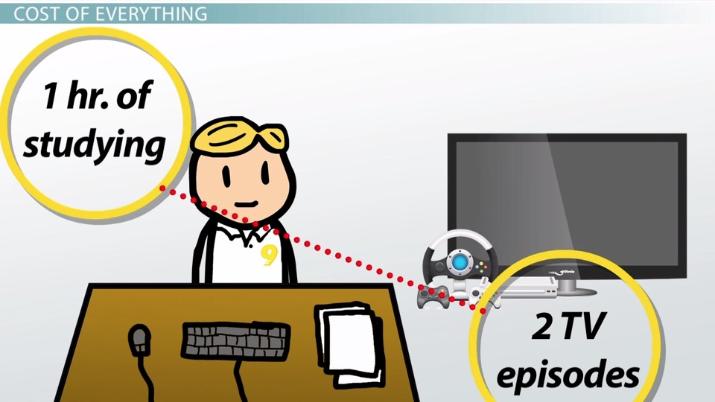
All through life, one thing is certain: there will always be choices to be made as different opportunities arise, offering options and alternatives. An economic concept that readily comes to mind that serves as a guide to decision-making is that of OPPORTUNITY COST. In simple terms, opportunity cost can be described as the value that a person forfeits by choosing one course of action over another. It usually involves both time and money and is present for every decision that is made. Alternatives and options are always present, and it is important to weigh the opportunity cost in making decisions. e.g., I was privy to the decision of a mother to finance her son’s university education abroad at the cost of purchasing a property in a prime location in her country. It was a choice based on her priority, after consideration of the opportunity cost of either option.

I was recently invited to mediate in a conversation between Mr. Babalola and his son, Derrick. Derrick had recently completed his National Youth Service, and his father, who ran a grocery store, had offered him the opportunity to manage the business with the promise of accommodation and a car attached to the offer. Derrick, however, had his sights set elsewhere. He had recently attended an Interview with a Multinational Tech company and was certain he would get the position of a Management Trainee. Though he would have to relocate to another city, the offer would provide him with the opportunity of extensive training and travel. It would, however, mean that Derrick would have to share a rented apartment with a friend and commute to and from work by public transport. The father prevailed on him to weigh the opportunity cost of rejecting his offer, especially in the light of succession to the business.

Derrick weighed the opportunity costs and decided that the opportunity cost of passing up an offer with that multinational corporation was, to say the least, “humongous.” He knew so many of his peers who would give anything for such an opportunity. He projected that the training and experience to be gleaned would catapult him into a league in corporate dynamics, far beyond the management of his father’s retail business, and he was ready to forego the immediate attraction of comfort for the perceived long-term gains. Besides, he opined, the training, experience, and network gained would be of futuristic benefit to his father’s business if he decided to return to it in the future. Following up, Derrick got the offer letter and moved on with his decision.

The importance of discussions like this, especially with teenagers and young adults, cannot be understated. Every day, choices are made, and options need to be weighed carefully in relation to one’s objectives. The opportunity cost of a choice is what is lost by not going with the alternative. I have seen some interesting choices made where a mother would rather owe on school fees and use the money for aso-ebi to the detriment of the child who was kicked out of school for default in fees. Also, the choice of material possessions over qualitative education.” After all, a school is a school, quality of education notwithstanding,” some would say.

I recall my discussion with a young man who said that when he gained admission to the university, his father never lectured him against joining cults but merely pointed out the opportunity cost of cultism versus concentrating on his studies, and that nailed it for him. He could be a cultist gaining popularity and notoriety, with the likely outcome of rustication, or face his studies squarely and achieve recognition through outstanding success, which opens doors for mouth-watering opportunities.

It is my prayer that we exhibit wisdom in our choices and teach the coming generations how to weigh their choices to enable them to make the right choices.

Love

Havilah

Exercise: Hype or Reality?

One bright morning in April, Odun and Zubaida were out walking the sidewalks of their housing estate for their 45-minute daily ritual, which offered them the opportunity of discovering developments within the estate while exchanging light gossip and banter. Did you hear about what happened to Tunde?” Zubaida began.” I was told he collapsed while climbing the stairs to his office yesterday and had to be rushed to the hospital. He has since stabilised and has been placed on a dietary and exercise regimen to wean him back to health and wellness.” Remember, he would always sneer at us while cruising around in his air-conditioned car and asking…Why do you ladies choose to suffer? After all, you both have a good build, no weight loss is needed…you look perfect. All our attempts to enlighten him on the benefits of exercise and that he should view exercise as a necessary activity for wellness and health, fell on deaf ears. It is all HYPE! Was his quick response. Unfortunately, he had to learn the importance and benefits of exercise the hard way. Yet, as they pounded the sidewalk with intermittent jogs, they found themselves pondering a timely question: Are the benefits of exercise mere hype, or do they hold up to scrutiny as reality?

In recent decades, exercise has emerged as something of a cultural panacea. Social media brims with testimonials about how running, swimming, or yoga has transformed lives. The market for wearable fitness technology and dietary supplements flourishes, fuelled by the persistent promise that movement is a gateway to a better, longer, happier life.

Odun recounted an article they had seen just last week: “Exercise can erase stress, sharpen memory, and even make you happier than money,” it declared. An ever-skeptical Zainab, responded bemused, “Is it really that simple? Can a thirty-minute jog do all that?”

Scientific studies consistently show that regular physical activity lowers the risk of chronic illnesses such as heart disease, Type 2 diabetes, and certain cancers. Cardiovascular endurance increases when the heart is challenged by aerobic activity, as does lung capacity and muscular strength. Yet, for all its proven effects, exercise is not a magic bullet, as moderation is required to prevent fatigue and injury. While moderate, regular exercise does appear to enhance immune function, reducing the risk of common illnesses like colds. However, excessive, or strenuous exercise may temporarily suppress immunity, making athletes more susceptible during periods of overexertion. Balance—rather than extremes—is key.

Physical activity is known to stimulate the release of neurotransmitters that can elevate mood and reduce anxiety. In fact, exercise is often recommended as part of therapeutic regimens for mild to moderate depression and anxiety disorders. However, though exercise can be a powerful tool for emotional regulation and stress management, it is not a cure-all.

Does exercise truly extend life? Studies suggest that physically active individuals live, on average, longer than sedentary counterparts. The difference can be several years, even after factoring in variables such as diet, genetics, and socioeconomic status. More striking, though, is the quality of those years: Regular movement preserves mobility, cognitive function, and independence well into old age. However, to be effective, it must be woven into a holistic lifestyle—combined with sound nutrition, restorative sleep, and supportive relationships.

The World Health Organization suggests at least 150 minutes of moderate-intensity aerobic exercise weekly for adults, alongside muscle-strengthening tasks. But even smaller doses—taking the stairs, dancing in the kitchen, or gardening—can be beneficial.

The benefits of exercise are real—rooted in science, echoed in lived experience—but not without limitations. The hype, while inspiring, sometimes distorts expectations. Movement can strengthen the heart, lift the spirit, forge friendships, and enrich life, but it is no panacea. The reality is both simpler and richer: Exercise is a tool, not a miracle; a celebration of what the body can do, not a guarantee of perfection.

In the end, the greatest benefit may lie not in the promises or the advertisements, but in the simple joy of moving side by side, step by step, beneath an ever-changing sky.

Love

Havilah

THE RAINS ARE HERE AGAIN

As I took one of my “ walks,” I happened upon one of my favorite street sweepers, and after our usual exchange of pleasantries, she pointed out a package of neatly packed and tied garbage with complaints that someone had dropped their garbage by the roadside. Incidentally, these were non-biodegradable garbage. Immediately, my mind went to the recent spate of floods across the country, much of which is traceable to blocked drainage and the fact that people have refused to learn and teach how to responsibly dispose of garbage.

My mind switched to some years back when I was teaching Sunday school/children’s church, and how I would always hound the children for dropping biscuit and sweet wrappers on the floor when the dustbins and garbage bins were provided for their use. This training and retraining continued, but there was a family of three siblings who I observed NEVER littered the floor. They so impressed me that one day, I engaged their mother to find out how she had managed to discipline them in that regard. The experience is worth sharing.

Mummy Shayo, as she was fondly addressed, gave a coy smile and spoke. “Uhm…we learnt to do the right thing the hard way. We had never really been mindful of littering the streets or other public spaces, but one day, the family was driving back from an interstate visit to my parents and had consumed a large quantity of bananas given to us during the visit. Suddenly, my husband looked back and saw the car floor littered with banana peels, so he instructed that they be thrown out of the window. Lashe, the youngest, decided to throw them out of his side and they landed smack in the middle of the road at a time the vehicle behind us had negotiated to overtake us. His rear wheels slid over the peels and caused a spin, whereby he brushed our car. Needless to say, we had to apologise and fix the minor repairs on both his car and ours, which was a hard lesson we learnt for our heedlessness…never to litter the road. Thereafter, it became easy to apply the lesson learnt to all facets of litter, and the children were made to not just clean up, but serve some punishment whenever they littered anywhere, be it at home or outside the home. It has since become ingrained, and even where they cannot find a bin, they would keep the garbage with them until they locate a bin to dislodge the items.”

It is never too early nor too late to teach children the value of a neat environment and prevent the disaster associated with untidy and dirty environments. If we all keep our spaces and environment clean and tidy, it translates to the larger society. Recently, someone asked what the street sweepers would do, as he felt they would be out of a job. My tart response was that they sweep the streets and keep sand and silt from building up, not waste and garbage. Let us learn to keep our environments clean and prevent health issues, accidents, and other hazards. The saying goes, “A cluttered desk is a sign of a cluttered mind.” In other words, physical clutter can contribute to or reflect an unfocused or cluttered mind, eliminating peace and calmness.

LET US JOIN HANDS TOGETHER TO TRAIN AND RETRAIN THE POPULACE ON THE IMPORTANCE OF ENVIRONMENTAL NEATNESS AND CLEANLINESS.

Love

Havilah

THE GREEN-EYED MONSTER

Cyril was one of those young, suave, upwardly mobile executives who frequently visited the University campus close to his residence, in search of a suitable “wife material.” During one of such visits, he met Vera as she took a break from her research in the library and headed to her hostel in search of a snack. Cyril was swayed by her beauty and calmness as she chatted with Shalewa, her roommate. Cyril approached her, pretending he intended to request her services in checking on a girlfriend whose number he had lost. As he tried so hard to describe his imaginary friend whom he named Bella, it suddenly dawned on Vera that there was no Bella, and she could not contain her amusement as she chirped brightly,” You sure got me there.” The ice was broken, and in no time, their relationship blossomed, and it was agreed that immediately after her graduation, the marriage would take place.

Two and a half years later, they were married, and Cyril proved to be the typical Alpha male. He was successful in his career and proudly played the part of breadwinner. He left no stone unturned to fund their lifestyle while dictating everything that needed to be done. Vera, on her part, was glad to cede all responsibility to him, especially since the disparity in their incomes was huge. However, with time, Vera landed a job with a multinational company and was earning hard currency. Her job took her around the globe, and she became increasingly relevant in her field. The green-eyed monster started creeping into the relationship as Cyril found himself losing grip. She could afford things, and even when she deferred to him on issues, he counted her as condescending. She was no longer his sweet, naïve Vera who waited at his beck and call for instructions. She was certainly more visible in social circles, and when they attended functions, greater attention was paid to her. It made him feel emasculated, and even though she tried so hard to make him feel desired, relevant, and wanted, his ego always got in the way. With the increased friction at home, Vera paid even greater attention to her career, and it was a no-brainer that Cyril started harboring suspicions that his wife was having relationships in and around her workspace. How else could she have risen so rapidly at work? Was she the only one who could swing the deals she cornered? How was she achieving so much and doing so well? He doubted that it was merely by effort and God’s favour. Yes, she was ardent about her faith and prayerfully managed her responsibilities, but then…

He decided he would burst her bubble, and as Vera returned from a phenomenally successful tour of her sub-region, he told her she would have to quit her job and that he could afford to take care of all the needs of the home. He insisted that if she needed to work, she could get a job that would keep her at home and less visible. Vera was stunned as she could not believe he would do such a thing. How could he? She was at the prime of her career, and life was interesting. It certainly did not make sense to resign now. She, however, cherished her status as a married woman because it put some of her male admirers in check, and she wanted it to stay that way. She could not believe that the madam “fix it” at work was now at her wits’ end on how to manage this situation.

If Vera sought your advice, what would you say? Havilah would be glad to read from you, proposed solutions on this thorny issue. I am all ears, or should I say – eyes.

Love

Havilah

AGEING WITH GRACE

Two high school friends Dehinde and Bodunrin found themselves side by side in the same hospital ward and were pleased to catch up after several years of not having contact. As Bodunrin exclaimed, “Dehinsman, where have you been? I cannot believe this is you after so many years. How long has it been….55 plus years? By the way, Faramade should be visiting me here in another two hours or so. He will be thrilled to see you”, he continued. After that, the two of them went into a long discussion, catching up on happenings and the whereabouts of classmates with whom they were in touch. As the discussions progressed, they shared experiences, but one common thread was inadequate preparation for the aging process, particularly as it relates to challenges regarding health, finance, and self-care/love.

Dehinde was the first to bemoan his situation. Having lost his first wife at the age of sixty and unable to cope alone, his family had insisted that he remarry. He ended up with Bisola (his current wife), who bore him a son, Mobolurin. Mobolurin, who is now thirteen, is an intelligent child and livens up his day, but he is greatly concerned about providing his financial needs, especially as his pension, which barely meets their living expenses. In the past fifteen years, the pension has remained static, oblivious of inflationary trends in the economy. It gets more difficult to cope by the day, and with the added burden of his health challenges, it gets worrisome. Dehinde recently had brain surgery, impacting his nutritional and medical needs, which have placed additional pressure on his finances. “I wish I had envisaged the situation and prepared adequately. More disturbing is the fate of my young son”.

Bodunrin nodded in acquiescence. “I agree with you Dehinsman. If anyone had told me years ago that I could end up with prostate cancer requiring so many procedures, laboratory tests, and medications, I would have doubted. Healthcare is probably one of the most important needs of aging and is extremely expensive to manage. I was diagnosed with prostate cancer some five years ago, and it has been a challenging and expensive journey since then. It has been chemotherapy, radiotherapy, periodic tests, and medications. All the hospital visits and laboratory tests I ran away from in years past eventually caught up with me when I had the diagnosis. To alleviate some of the symptoms, I have had to support my treatment with alternative medicine to improve my well-being. None of these comes cheap. I thank God for a supportive family, especially the children who have been impressive in providing financial assistance, without which I would probably not be here today”.

As Bodunrin rounded up, they both looked towards the door of their shared space, as if on cue, Faramade breezed in with springy steps. He had just returned from a Mediterranean boat cruise with his wife, children, and grandchildren. He appeared to be in the best of health as he pulled up a chair to sit beside Bodunrin. As he sat down, Bodunrin introduced him to Dehinde, whom he had not seen since they all left high school. Faramade peered at Dehinde before yelling, “Dehinsman, is this you?” The trio then reminisced about school days when Dehinde used to rule the tracks, representing the school in relay races. Dehinde shook his head in amazement as he asked Faramade for the secret behind his youthful agility, to which he replied jokingly, “It is arguing each case with my wife.” He then went on to explain that God had blessed him with good health, except for the occasional aches and pains, and he did not take it for granted. Nevertheless, on his own part, he managed his blood pressure and diabetes by taking his medications and doing his medical check-ups as needed. He explained that he had been a protagonist for check-ups and follow-up treatments over the years. His advice to his friend, Bodunrin had always fallen on deaf ears as he was considered obsessed with health and spent too much of his resources on healthcare, eating right, playing golf, and self-care. He concluded by stating that the aging process must be prepared for from all angles – spiritually, financially, health consciousness (healthy nutrition, habits, and exercise), self-care and emotional wellbeing. All these impact on one’s comfort in old age and with God on one’s side must be carefully planned for.

The three friends nodded in agreement and went on to discuss the proposed set anniversary scheduled to be held soon.

Love

Havilah

THE WINDOW

Seated at the reception lobby of a hospital a few days ago, I witnessed some incidents which got me thinking about the generation Alpha and their parents. At the hospital, I watched two young mothers manage their three-year-old babies and it got me thinking…hmmm.

The first mum left her three-year-old boy causing a cacophony by bouncing her phone charger on the metal chairs. Oblivious to him and his antics, she watched a movie on her phone, unconcerned until the “young man” started yelling to use the bathroom. Her response was a calm, ” pee on yourself – you have diapers on.” The grandma in me screamed…after potty training him all you can say is pee on yourself? Why did you bother training him? I restrained myself from uttering a word and was glad at the boy’s insistence which eventually got her up from her phone to take him to the bathroom. The second mum had just returned from the treatment room with her daughter who was crying her heart out and all she could do was try to appease her with biscuits, chocolates etc. all to no avail. The little one refused to be bribed as she cried even louder calling for her daddy. At this point, I could no longer hold my peace as I turned around and asked – “are you, her mother? Just hug and pet her.” As I spoke, a matronly woman in her middle age, seated beside her reached out to the girl and nestled her in her bosom. The little girl stopped crying and was rocked into silence.

Both ladies left me still seated in the lobby and I played over what I had just witnessed in my mind. The questions that befuddled my mind were –

  1. Which way humanity? When did it matter more to a mother to watch a movie than to pay attention to a child who was begging for attention? The child was obviously bored which was why he had been disturbing the peace with loud clanging of the metal chairs, but she not only ignored him but was insensitive to the comfort of others present in the lobby.
  2. Why would a mother encourage a child who was toilet trained to pee in their diaper when the facility had toilets? Was it laziness or lack of understanding? The answer – your guess is as good as mine.
  3. What has happened to the motherly instinct of instinctively cuddling a hurting child? Have we become so insensitive that we now replace caring with material benefits. Why would a mother’s immediate reaction to a wailing child be to offer a “pacifier” lacking the warmth of an embrace?
  4. What would we then expect from children who are raised without the attendant care reminiscent of motherhood especially as they live in a world of robotics? Are we raising “Human Robots” or human beings? May the Lord help us.

If we fail to enable the right bonding from infancy, what happens when the pressures of providing for them catch up on us. The problem with some teenagers is defiance. Parents seem to have replaced love and care with provision and sometimes with material possessions and the teenagers are rebelling because all they need is to be relevant in their parent’s lives. They then seek that relevance elsewhere which may lead them into dangerous waters. When the parents start feeling the pain, it is seen as a way of getting back on them for perceived deprivation of love and care. Let us hope it does not end in disaster for the family.

As we look out through the open window, we have a responsibility to correct erring parents and remind them that their responsibilities transcend provision and material possessions can never replace the bonding required between them and their children.

Love

Havilah

CRYING IN THE RAIN

Mairo is a pretty, smart, lithe lady with a bubbly, effervescent personality, attracting all manner of people to her – young and old, male, and female. She has a magnetic mien that is difficult to resist. Shafi, her younger sister, on the other hand, is the quintessential opposite – quiet, shy, reserved, plain-looking, and unexciting. Two things, however, stand out about Shafi: her very caring nature and her domestic excellence.

Shafi met BeeJay on her university campus, where she was studying Information Technology while BeeJay was pursuing his master’s degree in business administration. For the first time in her life, Shafi formed a close friendship with someone of the opposite sex. She found in BeeJay someone she could relate to and confide in. Shafi blossomed under their friendship and her grades soared. She became more visible with an added spring to her steps. This was a new Shafi, and her world took on a new dimension, that is, until she introduced BeeJay to her darling sister, Mairo.

Mairo lived in a bustling megacity, an hour’s ride from Shafi’s campus, where she worked with a successful Tech start-up. An excited Shafi invited BeeJay over to Mairo ‘s place, where she usually spent her school vacation and it was an interesting time as Mairo and BeeJay appeared to bond well. A satisfied Shafi was happy that the two dearest and most important people in her life seemed to get along well, and she happily left them to chat while she retreated into the kitchen to do what she did best – whip up a delicious meal for everyone. While in the kitchen, she recalled her anxiety about BeeJay and Mairo getting along. She loved BeeJay, although she had not discussed that with him and as for Mairo, she could do anything for her because she stepped in to fill the void since their mom passed on five years prior.

Little did Shafi know that this meeting would be her undoing and that it would shatter her peace. The meeting sowed the seed of a relationship between BeeJay and Mairo that would eventually lead to a marriage proposal. They were a compatible pair with common interests and values and goals. Mairo recently informed Shafi of the development and their intentions, which have left Shafi devastated. She feels torn apart as she wrestles with her feelings of joy for her sister (after all, BeeJay is the “perfect guy” every woman’s dream man – her sister deserves the best) and her feelings for BeeJay. He was the best thing to have happened to her and even though they had merely remained friends with him encouraging her on life’s journey, she secretly desired and hoped for a deeper relationship. She fantasized about marriage to him. This news from Mairo was indeed heartbreaking and she had scoured the internet for a song that adequately captured her mood and situation. She was listening to the lyrics of CRYING IN THE RAIN by The Everly Brothers and sobbing gently, soaking her pillow with tears, when Mairo sauntered in. Mairo was distraught to see her younger sister so distressed and sought to know the cause of her distress. Mairo refuses to back down, but Shafi is unsure about what to do. How would Mairo react to the truth? Would it put a damper on the relationship between all three of them? Would she be able to get a grip on her feelings for BeeJay? She listens to the last stanza of the song and with a forced smile, sings out to Mairo…”

Someday, when my crying is done,

I’m gonna wear a smile and walk in the sun.

I may be a fool, but till then, darling.

You’ll never see me complain.

I’ll do my crying in the rain.”

Havilah asks – what would you advise Shafi to do?

Love

Havilah

Elderly Blues?

Papa and Mama Tembu had lived very energetic and fruitful lives in their professions as a University Professor and Radiologist, respectively. Having hit 70 and 67 years respectively, they decided to retire from the bustling capital city in which they had spent most of their adult life, back to the suburbs where they built their retirement home. This meant a gradual reduction in activity. Two years after the move, Papa Tembu was diagnosed with Parkinson’s disease and Mama Tembu had to take on his care. Within a year, Mama Tembu was involved in an accident while returning from an errand to the city on behalf of her husband and ended up with paralysis. This brought their three children (all diasporans) back home to make cogent decisions regarding their parents’ welfare. The older two were based in Australia and Japan, respectively, so the responsibility to coordinate their care fell on Funeka, the only female among them who was also closest in proximity, living in Germany. They employed a caregiver, cook, and driver, and Funeka coordinated efforts through daily phone calls and video calls, as well as an annual two-week visit when she could get time off work.

While Funeka tried her best to monitor events, there were some lapses resulting in undesirable consequences at times, as the paid personnel either omitted or neglected to fulfill their responsibilities effectively. She also discovered collusion from time to time and effecting personnel changes was never easy. Whenever she was on the ground or any of her siblings, the household ran smoothly, so they figured that the household needed closer monitoring to work effectively – a situation where someone could give surprise visits and take quick decisions. This proved difficult to resolve as most of their friends were resident in the city or abroad and occupied with earning a living. Extended family dynamics had changed with members being dispersed and a change in levels of education and socio-economic dispositions.

The children tried weighing the options. Do they :-

  1. Relocate the parents to live with one of them?
  2. Rotate them among all three of them?
  3. Relocate each separately?
  4. Place them in an institution for the elderly (if available back home)?
  5. Employ a Manager/Personal Assistant to manage their affairs?

Relocation brought along immigration related challenges, adaptation to an unfamiliar environment, as well as other considerations, while institutionalising them was fraught with emotional considerations. Could they trust a Personal Assistant to do his work, and how stable would such an arrangement be?

These are some of the challenges that beset the elderly today and reflect the reality of our times.

The Elderly often experience loneliness and disquiet as they reflect on some of these challenges as they respond to life’s changing circumstances. This state can oscillate between fleeting moments of nostalgia or loneliness and more enduring periods of quiet sorrow. As a result, the elderly may find it harder to reach out or maintain connections. Family and friends, unsure how to respond, might inadvertently pull away, deepening the isolation. Communication can become stilted, and misunderstandings may arise, further complicating relationships.

Aging is both a privilege and a challenge. The elderly blues, though tinged with sadness, are also a testament to love, memory, and the passage of time. By acknowledging this emotional landscape and responding with compassion, society can help elders find solace, purpose, and joy, reminding us all that every stage of life is worthy of dignity and care.

A parting word for the children – this is the time when love, understanding, care and sacrifice has to be shown in appreciation for all that was poured out on them by the parents. It takes careful consideration to enable the best decisions to be taken that will work for both the parents and children alike. Most importantly, it requires God’s guidance and wisdom. May the Lord help us all.

Love

Havilah

NADIA

While rummaging through some items to which I have been sentimentally attached over the years, I came across the sleeve of a cherished musical album that made waves half a century ago. The South African album – Ipi Tombi! (Did I hear a chuckle…wow, half a century ago?) Well, it got me thinking about one of my favorite songs in the album, titled Nadia. Nadia told the story of a young man who had to leave his village, leaving behind his wife, three children, and aged parents, to seek greener pastures in the city, with the hope of providing them with a better life. It captures the concerns, uncertainties, and cultural shock, but ends on a hopeful note of achieved expectations and a reunification with the family. That was the trigger I needed to recall the common incidence of employee migration and its sometimes-unintended impact on families, resulting in fragmented family lives. Take the case of Boye and Ike.

Boye, married to Linda with two beautiful children in Secondary school, lost his job due to “rightsizing” by his employers, and for two years, try as he may, he couldn’t secure a job. Linda was, however, cooperative in maintaining the home to tide them over the rough patch. In the third year of unemployment, he got a mouth-watering offer in Zambia and proceeded with the intention of long-distance commuting to keep the family unified. This was agreed with Linda, who felt unsure about leaving her lucrative job for the unknown in Zambia and had concerns about the impact on the children’s education. Boye thought he had it all under wraps, and for about a year, everything worked out just fine. Thereafter, the visits home came at longer intervals, and Linda could not make the trip over with the children except at Christmas. Boye attributed the reduced visits to his workload and his work-related responsibilities in other regions. By the time the children gained admission to the university and Linda saw the need to relocate to Zambia, she discovered that he had a daughter through an ongoing relationship in Zambia. Although this was deeply disconcerting to Linda, wise counsel prevailed, and she was able to win back her husband and accept the addition to the family.

Ike, on the other hand, was seconded by his company to serve in their regional office in Egypt. His wife, Morenike, was apprehensive about how the move could affect the family, so she quit her job and insisted that they relocate along with the children. Unfortunately, when she arrived in Egypt, the terrain was difficult for her, and obtaining a job proved impossible. She tried her hand at business enterprises but was equally unsuccessful. The situation put a strain on their relationship at home, resulting in Ike spending less time at home. Before she knew it, she fell into the temptation of having an extramarital relationship. This shattered the core of their relationship, with both parties putting up appearances for the public.

Havilah realises that employee migration is inevitable in a world that is fast becoming a global village, but the pros and cons must be weighed carefully, expectations spelt out and executed, and discipline and restraint exercised. Of course, numerous families have successfully charted the course of employee migration and have reaped its benefits. It, however, could put a strain on marriages and families and must therefore be carefully weighed and agreed upon before embarking on it. There is certainly no “One cap fits all,” and each family must consider their peculiarities before taking such decisions. As we migrate in search of greener pastures, let us bear in mind the words of my favorite piece…” Look at that bright star, always remember under that same star we’ll be together.”

Love

Havilah

RELINQUISHED RESPONSIBILITIES?

Sunday was another Father’s Day, and Fathers were celebrated worldwide. As I listened to the charge for the day at my local church, I could not help but ponder a few things. A quick summary of the charge is required to enable you to connect the dots. The message to men highlighted their responsibility from three dimensions:

  1. Responsibility to family. The biblical instruction to provide for their family was stressed.
  2. Love for their wives.
  3. Raising their children with love and guidance rather than anger and frustration.

While ruminating over the charge later that day, I remembered two families who, some years back, had been acquaintances of mine at various times. My attention was drawn to the first responsibility, from the charge i.e., provision for the family.

The Bello family was a family of four comprising mother,  father, and two children. Mrs. Bello was the sole financial contributor to the family as her husband believed that, since she was financially capable, he should leave EVERYTHING to her – House rent, electricity bills, school fees, maintenance of the house, cars, etc. Whatever he earned was spent entirely on himself, and he saw no reason to do otherwise. While shirking his responsibilities towards his family, he still insisted that she fulfil hers in terms of household chores and mentoring the children. This continued for years with the wife bearing all responsibilities grudgingly. However, after the children left home, she filed for divorce, and it was only then that Mr. Bello realised his folly. When questioned about his reason for abdicating his responsibilities, he said he felt it was only fair that the person with the better financial package bear the responsibility, after all, the two had become one. His response was, “God continued to bless her, but things were not working out for me.” Mrs. Bello, on the other hand, explained that in the early days, she had implored him to put whatever little he had down for running the home, but all her pleading was ignored. She had then struggled to meet up with the responsibilities and found that over time, she received favour in all her endeavours, and things turned around positively. I then counselled him that “relinquished responsibilities result in relinquished blessings,” and because there is no vacuum in nature, God raised up his wife to fill the vacuum. It was a learning point for Mr. Bello as he was determined to right the wrongs by taking up responsibility for the home. Luckily. Mrs. Bello was ready to give him another chance.

For the Gbenros, it was an analogous situation in which Mrs. Gbenro was largely responsible for most of the spending. Unfortunately, despite Mr. Gbenro’s efforts, he was unable to secure a job. He, however, accepted employment far below his level to enable him to contribute to the family’s finances. He was not lazy and assisted in every way he could, thus winning the love and respect of his family. It was never evident to third parties who provided the finances, and the Gbenros exuded love. About 15 years into the marriage, fortune smiled on Mr. Gbenro, and he was blessed and favoured with employment that more than made up for the lean years. Obviously, he never relinquished his responsibilities even in the lean years. He had his challenges, but he did the best he could and earned the love, understanding, and cooperation of his wife.

Although today’s message may be tagged a Father’s Day message, it applies to all parents…RELINQUISHED RESPONSIBILITY ATTRACTS RELINQUISHED BLESSINGS. May we all be guided to play our roles.

Love

Havilah