MARRIAGE- AN OUTDATED MODEL?

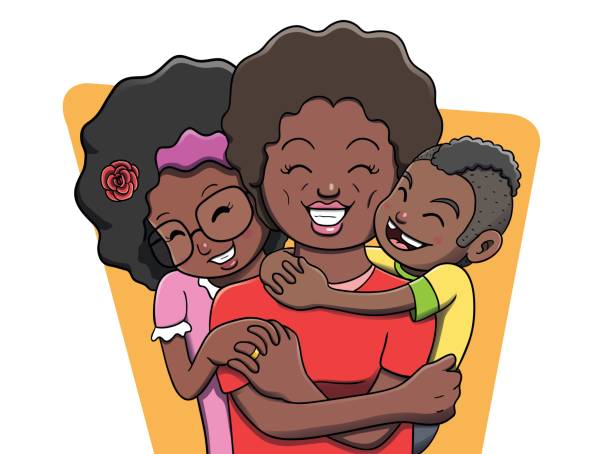
Mr. and Mrs. Bruno are comfortably seated on their patio, sharing a bottle of sweet red wine and reminiscing over their courtship days. It is their 35th  wedding anniversary and they ask themselves where the time went. Their two daughters, Kewe and Roli, aged 31 and 33 respectively, are graduates with comfortable though demanding jobs while their brother Renner, at 29 is a qualified neurosurgeon with one of the Teaching hospitals. As the happy pair turn their searchlight on their milestones over the past years, in walk the ladies – kewe and Roli, with some finger food and grilled fish (a favorite dish of the parents). After a hug each and the usual pleasantries, they settle down to join in the wine-drinking and conversation. Mrs. Bruno resumes her reminiscing with “Temi (meaning mine), do you remember the day my father came home and met you comfortably seated in our sitting room? We were deep in conversation and did not hear him come in from work…Mr. Bruno quickly cuts in with a burst of laughter and continues ” how could I ever forget? That was indeed funny. I felt like a kid caught with his hand in the cookie jar. One look from your dad and I froze in my seat. I didn’t even notice his outstretched hand for the handshake that never came, neither did I hear a word of what he said until he barked at me in his baritone voice saying…”Omare, where did you find this discourteous young man? Did the dog bite off his tongue or is he a breathing statue”? mimicking his father-in-law. At this, all four of them fell into fits of laughter to which Roli exclaimed ”I can just imagine the look on grandpa’s face even as he spoke!”

After the laughter subsided, almost as if on cue, the parents chimed in unison – “by the way ladies, when will we meet with our sons-in-law? It is about time you settled down. Life is not all work”. Kewe responded with a quick “soon enough mum” while Roli went on to ask rhetorically, “where are the men”? The responses formed the basis of a lengthy discussion by all four as to the challenges faced by today’s young adults, regarding “settling down in marriage”. Roli sets the ball rolling with “Dad, your days were different. You guys had integrity which showed up in virtues like sincerity, trustworthiness and steadfastness. When you talked about love you were not stringing the ladies along and you were faithful. Besides, your parents were your role models and their marriages acted as the blueprint for you to follow. We saw that with grandpa and grandma Soares. I remember how grandma used to fuss over grandpa like a mother hen”, she said with a laugh and continued. “The converse is the case today. The men are so filled with deceit, insincerity and falsehood. You cannot trust them or take their words for truth. Speaking of which, mom, do you remember my friend Lande who now lives in Banjul? She suffered a nervous breakdown when her fiancé ditched her a week before the wedding after confessing to being lawfully married to another lady abroad. Can you imagine how devastating it was for her?”

“In addition” Roli chips in …” Many do not have sustainable incomes and worse still are those who cannot succinctly reveal their source of income. In response to inquiries about their occupation, you hear responses like “This and That” – r-e-a-l-l-y, where do you place such? Also, a number of them suffer from Narcissistic Personality Disorder (NPD) whereby they exhibit an inflated ego and severe lack of empathy, resulting in a series of whirlwind romances. To be honest dad, your generation has failed us in the portrayal of healthy marriages. We have observed that a number of marriages can be considered failed marriages although the participants remain in the unhealthy situation, to keep up appearances. Mrs. B…count yourself one of the lucky few to enjoy the institution”.

Just then, Renner interjects. (He had arrived while the family was in the middle of the conversation and had his own opinion on the topic). “Come on ladies, this is a very biased notion of the situation. I certainly agree that what you have said is true but not all of us guys are bad. Sometimes the economy makes it difficult to settle down in marriage because financial adequacy is an important requirement in marriage. Where are the jobs and where they do exist, does your take-home income actually take you home? Let us also be mindful that some of the ladies out there are only interested in good times and are “fair weather” partners. There is also the set that practices radical Feminism in its most extreme form. They seek to dismantle traditional power and gender roles by advocating equality in every situation. This raises a red flag for men seeking to settle down in marriage”.

Mrs. Brume ends the conversation with “Hmmm…it appears that we have a lot to do to reinvent the wheel regarding the attitude of our young adults to the institution of marriage. Religious organisations such as churches, mosques, etc, and parents, have a lot to do in this regard as trust has to be rebuilt in marriage being a veritable institution for the propagation of mankind”.

Love

Havilah
NEVER SAY NEVER

Ronke and Mide had been married for 25 years and in spite of attending fertility clinics over the years, they were yet to have the much-desired child. All attempts to have a child of their own had proven futile and in the last five years, all three attempts at In Vitro Fertilisation (IVF) had ended unsuccessfully. The counsel of friends and family members to legally adopt a child had also fallen on deaf  ears for two principal reasons:

  1. Clinical results showed that both of them were fertile and should be able to conceive.
  2. They were concerned that they would not know or understand the genetic makeup of the adopted child and the inherited traits and diseases.

Their doctor had therefore invited them over to discuss another viable option open to them…SURROGACY.

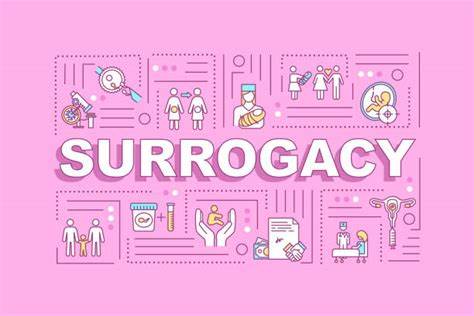
Surrogacy is the process by which a woman is contracted to carry and deliver a child for a couple through In Vitro Fertilisation (IVF) or Intrauterine Insemination (IUI). The method to be used is determined by the type of surrogacy – IVF for Gestational Surrogacy and IUI for Traditional Surrogacy. Both types however require a legal contract between the couple and the surrogate mother prior to commencement to tie up all loose ends. There are two things that distinguish the options of surrogacy. i) With Traditional Surrogacy, the egg used is that of the surrogate mother which makes the surrogate the birth mother. The sperm used may be that of the male parent or a donor. However, with Gestational surrogacy, the egg is not that of the surrogate but is donated.

ii) Traditional surrogacy could lead to complications as there is a genetic bond between the surrogate mother and the child with the child and if she decides to withhold the child, it could result in knotty legal issues. Usually, Traditional surrogacy is rare because it can be fraught with complications and so is usually contracted with family or close friends who do it for altruistic reasons. This does not however arise with Gestational Surrogacy which is seen merely as rendered service for which the surrogate receives compensation.

Dr. Bentley’s recommendation to Ronke and Mide is as follows: “It is best you consider a Gestational Surrogacy where a neutral carrier would be sourced purely on a contractual basis. This would undoubtedly carry a financial burden of compensation in consideration for the services to be rendered in carrying the baby to term/delivery in addition to all the medical bills and associated pregnancy costs. This option is recommended especially since you both have healthy eggs and sperm and the only problem is the susceptibility of your womb to miscarry. That way, both your egg and sperm will be united and the ensuing embryo transferred by In Vitro Fertilisation into the uterus of the surrogate and she will be monitored until the child is delivered and given to you. Of course, a legal document detailing the steps and all that pertains to the contract must first be agreed and signed. Please go and consider it thoroughly and if found a viable option for you to pursue, give me a call. Are there any questions that may help your decision-making?

Ronke exhaled with a deep sigh and said in a quiet voice: “Doctor, I have a number of questions.

  1. Will the child carry some of the DNA of the Surrogate mother?
  2. Can she under any circumstances lay claim to the child?
  3. What happens if she miscarries or if the child is stillborn?
  4. What happens if the child is born with a disability?
  5. Can the child be breastfed by her after delivery or how does that play out since we take delivery of the child immediately after he/she is born?
  6. How can we be certain that she would take proper care of the foetus during the pregnancy and not subject it to harmful or dangerous exposure?
  7. What happens if she dies during childbirth”?

Doctor Bentley replies “Rest assured sir and ma that the screening process is thorough and the potential surrogate’s age, lifestyle and medical history will undergo scrutiny. The Legal contract will also address the issue of ownership of the child, what happens in the event of miscarriage or stillbirth and breastfeeding among others. You can never be held liable for her death as she would be made to understand that she is taking a risk that could result in fatality although you may be required to take out life insurance for her in that regard. The draft contract will be vetted and agreed upon by both parties prior to execution and commencement of the contract, so you must read and agree to the terms first. Also, the surrogate is merely a vessel of delivery and her DNA cannot be transferred to the child. The child’s DNA will only relate to those who own the egg and sperm used which in this case will be yourselves. I hope I have answered your questions, so I look forward to hearing from you after you have made your decision”.

It is indeed heartwarming to know that strides in science and technology have made it possible for couples desiring to have children but who are constrained by challenges regarding fertility, to have increasing options, the latest being surrogacy. Havilah applauds the development and salutes all scientists who strive daily to improve our choices.

Love

Havilah

SEQUEL TO PLEASE HELP ME I’M FALLING

I want to thank all who took the time to send in advice for Mami’s consideration towards assisting with Paula’s dilemma last week. There were suggestions for her to go either way – follow her heart, or stick with her husband. However, the resonating word was “happiness”. She should go with what gives her happiness.

Havilah’s take is that “Happiness comes from within”. She needs to find her happiness and peace by connecting with God.

PLEASE HELP ME I’M FALLING…

Paula reaches out to her childhood friend and “besto” Mami and leaves a voice note“ Hi Mami, I know it’s been a while since we caught up, can we do lunch at 1 pm at the mall on Saturday? Sis, I need your wise counsel as always and indeed, right now, I need it more than ever before. See you on Saturday…Love Paula”. She is torn by indecision and needs to share her confusion but first, some background about Paula.

Paula is a Medical Practitioner with a thriving practice in the metropolis. At 54, she is the proud mother of two young adults the second of whom graduated recently. She is in an unhealthy marriage with Chuma who persists in abusing her emotionally. Paula considered exiting the marriage a couple of times but resisted the urge to do so on the basis of societal opinion and pressure.

On Saturday, Paula meets up with Mami at their favorite spot in the mall and settles down to tell her story.

“ Hey, Sis, maybe if you had accompanied me to Nonso’s grad six months ago, I wouldn’t be in the predicament I find myself in now”. She continues “On that day, I had parked in the parking lot of the University and headed toward the auditorium when I remembered that Nonso’s congratulatory card and gift were in the car, so I turned back abruptly only to bump into a stately-looking gentleman who was also hurrying towards the auditorium. After a quick exchange of apologies, we introduced ourselves and he volunteered to accompany me to the car to retrieve the forgotten items. Needless to say, we returned to the auditorium in each other’s company and sat out the entire ceremony in engrossing conversation.  Our conversation revealed that my new acquaintance- Bernard, is a widowed Endocrinologist with three children, the last of whom was graduating in the same set as Nonso. We share mutual interests and by the end of the ceremony, it was clear to us both, that we enjoyed each other’s company. We exchanged complimentary cards and I made a mental note to limit the level of our interaction because I felt some attraction to him which I intuitively knew was mutual. Afterall. I am a married woman now.

However, two months on, while attending to a patient who requires an Endocrinologist, Bernard readily came to mind since, during that period, we had exchanged short telephone conversations. I referred the patient and agreed to meet to discuss the patient’s treatment regimen in Bernard’s office at his instance. Since then, I have spoken to him almost on a daily basis and had a few lunch dates. Mami, Bernard is such a gentleman, I look forward to our conversations and honestly, he treats me like a queen, and makes me feel special. I feel completely at peace with him and loved. The best thing about it is he professes his love for me and he is so transparent. What we feel is mature love and understanding”.

Mami interjects saying “Slow down Paula. I have a couple of questions –

  1. It is clear to me you have been swept off your feet but are you certain he feels the same about you?
  2. Does Chuma know about this …friend?
  3. What do you think the boys will say or feel?
  4. What are Buba’s expectations regarding the relationship?
  5. Have you truly evaluated your feelings for Chuma and have you given your relationship your all”?

Paula responds with a deep sigh and says ”Trust me, sis, I am caught in a web because my relationship with Chuma is routine. He is recalcitrant and my life with him is bland and void of emotions. My feelings for him are dead and I live a dreary life. Bernard on the other hand excites me and I have tested him and believe his love to be true. However, my upbringing prevents me from getting more involved with Bernard unless I am divorced. The question is should I follow my heart and leave the known for the unknown? Will such a move negatively impact the children? I hope not because they had over the years, criticized their father’s treatment of me. Don’t I deserve some happiness”?

Mami responds by letting out a deep breath…” Whoa, Paula, this sure was unexpected and I am short of words. I will pray for God’s wisdom to guide my utterance and hope to advise by our next meeting on Saturday. Now, smile and let’s order our lunch. God makes everything right in his own time”.

If you were Mami, what would you advise Paula to do in the circumstances? Please send your responses in to assist Mami with her advice.

Love

Havilah

RAISING KIDS IN A MIGRATION ERA (“THE JAPA ERA”)

Most young families from Africa and more especially from Nigeria are experiencing anxiety about the future well-being of their kids which has resulted in an unprecedented rush to relocate their families abroad. While this “unfortunate “ development cannot be helped, it is important for the couple to consider likely challenges as it relates to raising these kids to assist them in making well-informed decisions. In other words, LOOK BEFORE YOU LEAP.

Fatu a recently migrated mother of three, shares her memoirs with us on this all-important topic. Please read.

“Dubi and I suddenly realized that our combined income as graduate employees barely “took us home” and we needed to consider the lives of the three young children we had and evaluate the chances of giving them a good education and opportunities for a brighter future. We then decided that the key to our future lay in our relocating abroad. We channeled all our efforts and resources towards achieving the goal and within six months we were headed to the United States of America with our three children in tow – Benibo (aged 4), Soba (aged 8) and Tare (aged 11). Much as we did not expect the transition to be easy, we were blindsided by some of the challenges involved, particularly those of raising children in a novel environment.

The most daunting challenges, in no particular order, were :

  1. The difficulty in covering our expenses from our combined paychecks. To enable us improved wages, there was a need to go back to school and earn local diplomas/certificates. Covering basic costs like accommodation, feeding, heating in the winter, etc. were not considered within the context.
  2. The absence of a support system for the care of children. Home assistance and child care support were very expensive and beyond our reach. Unfortunately, there was no family structure to fall back on unlike the situation back home where our parents, siblings and extended family members acted as fallback options.
  3. Security and Safety of the children if left alone at home. In addition to this, the law makes it illegal to leave a child alone unsupervised at home as this could even result in incarceration.
  4. Discrimination at school and public places.
  5. Cultural differences relating to discipline, courtesy, food, mode of dressing, and perception among others.
  6. Impact of the residential district on the quality of education for public schools. Private schools are expensive therefore reliance is placed on public schools. However, in most cities, residential zoning is done and most residents’ children are restricted to their school zone.

It was indeed a struggle navigating the challenges and overcoming them but God came through for us. I decided to spend more time at home to inculcate the right values in the children and allow Dubi to do more of work and school. It was indeed tough times as every cent was needed but we needed to strike a balance between inculcating the right values in the children and pursuing the funds. It was a rude awakening for me after returning home, tired from work one night and having Benibo (our youngest) extend his hand to me and say “Hi Fatu”. I wondered…what happened to welcome back mum? I knew immediately that if I didn’t want to lose these children to a strange culture, we needed to deny ourselves some luxuries while I train them.

Shortly after, I observed that Tare’s grades were slipping southward and he appeared disinterested in school. When I raised it with him, his response was “Hey mom, I don’t have to go to school to make a living. Why must I go to school”? After lots of digging, I found out that 2 things were responsible for this new stand:

a) He was constantly discriminated against and teased in school and

b) the dropout rate from his school was high. I was then advised to change the school district to a better one by changing residence. This we did, and this improved his outlook while I worked on his self-esteem.

I installed security cameras within and around the house to assist me to monitor what the children were up to from my phone at any time.

I also discovered that contrary to the common belief that spanking (corporal punishment) is banned, it is still allowed in some states for the purpose of correction provided it is not excessive or does not inflict serious injury. This gave me some comfort as I was able to discipline them by interspersing spanking with the reward and withdrawal approach. I reward good behavior and performance while I withdraw privileges for bad behavior and underperformance”.

It, therefore, behooves couples intending to migrate to consider extensively and research the laws, circumstances and environment that could impact raising kids in their host country of choice prior to moving.  

Love

Havilah

REPRODUCTIVE CHOICES/ABORTION RIGHTS

Abortion Rights are a world topical issue with increasing concerns, particularly in the Western world and more especially in the United States of America where it serves as a fundamental determinant of the results of their current Senate/ House of Representatives and Gubernatorial elections. Seeing that this impacts a lot of women regardless of age, status, creed or race, Havilah went out to seek the opinion of a few professionals on the topic.

Dr Titi Bakolori kick-starts the discussion with a definition of abortion. She explains “Abortion is the termination of an ongoing pregnancy usually within the first twenty-eight weeks of pregnancy. It may be as a result of natural causes (spontaneous abortion) or induced (medical and or surgical abortion). When a woman suffers the loss of her foetus before the 20th week of pregnancy without any inducement, it is referred to as a Spontaneous abortion. The woman has absolutely no control over this. On the other hand, induced abortions are carried out either at the instance of the woman or with her consent. Most often, induced abortions are viewed negatively with the notion that it promotes promiscuity and irresponsibility by women but there are certain occasions when abortions are required to save the lives of the mother and/or child or to prevent very undesirable conditions for them. I will give the example of two of my patients, whose real names are withheld –

  1. Pelumi travelled to the Caribbean on official training during the first trimester of her pregnancy. While there she experienced feverish conditions which she thought to be malaria but upon a visit to the health facilities, she was diagnosed with and treated for the Zika virus. On her return, she visited me for follow-up treatment and when I enumerated the types of birth defects that could result from having contracted the virus, she opted to terminate the pregnancy.
  2. In the case of Anitie, her husband travelled on official duty and the very next day, armed robbers attacked their flat and she was raped. On his return, she reported the robbery but concealed the rape from him, because she was unsure about the effect of such information on their marriage. Unfortunately, she later discovered she was pregnant and being uncertain about the paternity (whether her husband or the rapist) she decided to terminate the pregnancy”.

Kulu, a Women’s Rights activist expressed the following view. “Every woman reserves the right to determine what to do with her body. The pregnancy is hers to carry and she should determine whether the circumstances are conducive for her as well as whether to carry the baby to term. The responsibility of carrying the baby in her womb rests squarely on her shoulders, so the decision to do so or otherwise should be hers. Take the instance of a certain lady who had three children and was struggling with giving them a good education. She was the breadwinner since her husband lost his job and was unable to secure another one. In spite of using contraceptives, she got pregnant and could not imagine coping with another mouth to feed. It was foolhardy to expect her to keep the pregnancy in that situation. It was her call to deal with the situation in the way she considered most appropriate and she opted for an abortion.

Or can you imagine a pregnancy resulting from incest between a father-daughter, uncle-niece or cousins? How on earth would the victim want to keep such a pregnancy? Imagine the odium, shame and mental trauma she will be forced to deal with on an ongoing basis. My take on the subject is that if Abortion remains unacceptable in the public eye, what will inevitably happen is that illegal abortions will continue to thrive and place more women at risk of complications or even death”.

Cynthia, a psychologist, on her part approached the topic from both a spiritual perspective as well as the consequential perspective. She expressed herself as follows – ”Both the Bible and the Quran clearly instruct that life is sacred and bloodshed by taking life is unacceptable. If one takes the position that life comes from the Creator and not from the woman who is merely a vessel of passage for the life, then she has no right to terminate a life she did not create. Although it is often arguable as to what stage or age the foetus can be referred to as life, abortion becomes increasingly less acceptable, the later the age of the foetus. Abortion becomes even less desirable when one considers some of the undesirable effects it sometimes has on the woman. Women have been known to suffer complications in pregnancy subsequent to abortions as well as secondary infertility. Also of concern is the feeling of guilt and the consequent impact on mental health suffered by some women who have undergone the procedure. I am therefore of the opinion that abortions should not be legalised.”

While the debate remains heated, it is obvious that as is common to most topics for debate, there are arguments for and against legalising abortion. If the merits of the arguments are to be considered, legislation should be drafted with due consideration of the positions held by qualifying the unacceptable conditions and the age of the foetus involved.

Your views on this topic will be most welcome.

Love

Havilah

SINGLE PARENTING – THE BANE, THE PAIN AND THE GAIN

Marcia, while working on her documentary on – SINGLE MOTHERHOOD, CAUSES, PAINS, GAINS AND EFFECTS – happened on the realisation that outside of widowhood and divorce, an appreciable number of single mothers exist as a  matter of choice. The choice is often a result of experiences and with the kind permission of three such successful ladies, she shares their stories.

Nadu grew up in a middle-class home where her father was the typical Alpha male, Lording it over the family and more specifically, his wife. The emotional and sometimes physical abuse was palpable and Nadu grew up believing, she would never be found near an Alpha male. When she was thirteen, a pretty girl who looked more mature than her age was sexually assaulted and raped at a school friend’s house. As is typical with most rape victims, she was too ashamed to report the incident. Besides, who would she tell and to what intent? Her father whom she feared and expected would blame her and increase the trauma, or her mother who was already battling with her own trauma from her marriage? Why increase her pain? She decided to bottle up the pain and deepen her resolve to sideline the masculine gender. She had formed an undesirable opinion about that. However, fresh out of the University at age 22, she came across Benji who swept her off her feet. Her resolve to keep away from men was cast aside and she fell in love building the sentimental fairy tale of getting married and living happily ever after. Benji continued to goad her and lead her on in that dream but the dream was rudely shattered when she learnt, two years down the road, that he was getting married to her friend – Kas. The shock was the final stab that severed all thought of marriage but she desired a child. She then decided she would use a sperm bank as she did not want anything to do with men anymore and would rather not have physical contact with the father of her child.  She ends her story with “what you do not know does not hurt you”.

Eli on the other hand was at the point of marriage when disaster struck. A life-changing disaster that shaped her future. It was her wedding day and Quashie had called her to reassure her of his undying love and that he would be waiting for her at the Cathedral. Knowing her penchant for lateness, he pleaded with her to be on time and ended the conversation with his usual “I love you die”. She hurried up with her dress and arrived at the church on time. After a one-hour uncomfortable wait in which she constantly chimed “something must have happened to Quashie” she was taken into an anteroom and sedated. When she woke up, she was informed that Quashie’s car had been involved in an accident and he was in critical condition in the Emergency room of the teaching hospital. Without changing her clothes, she hurried to the hospital in her wedding gown and managed to express her undying love to him before he closed his eyes in death. Shortly after, she realised she was pregnant and vowed to take care of their love child without any interference. She decided to raise Kobina alone.

Efe on her part was from a financially disadvantaged background and struggled to see herself through school. While in the University, she came across Chief, a married businessman who helped sponsor her education. In the course of their relationship, she fell in love with him but Chief had told her that his marriage was sacrosanct and could not be disturbed. She agreed to honour his wishes by remaining in the background. That has worked out for her.

It is important to note that the reasons for single parenting are as varied as the experiences and circumstances in which individuals find themselves and no single cap fits all. Regardless of the reason or cause for becoming a single parent the reality is that society has a significant number of single mothers and their roles, concerns, challenges and contributions should be acknowledged and accepted. The status of single mothers should not be viewed in a derogatory light but rather, appreciated especially as a number of them have distinguished themselves and continue to play a laudable role in both society and the lives of the children they raise. It is important to note that we are shaped by and are products of our environment, our experiences and our values.

Love

Havilah

TIDYING UP AFFAIRS – THE REALITY?

“Much as Africans think it is morbid to prepare the family for life after a loved one’s departure from earth, the reality is that death is a necessary end which will come when it will come. We cannot shy away from death. What happens to our loved ones after our passing is therefore of utmost importance and requires careful planning and execution”. These were the opening remarks of the coordinator at a symposium for intending retirees, held recently to sensitise them on various options of provision for members of one’s family after their departure. The discussants comprised a young widower and three widows at different stages of their lives.

Ikechukwu is a widower whose wife, Miranda, worked as a Personal Assistant to the Managing Director of a Construction firm and lost her life in a car accident while on an official trip. The office invited him to the office to collect her benefits after her demise and in his own words, ”You could imagine the shock combined with a sense of shame and disappointment when I arrived at the office to collect the entitlements, hoping it would help with the first term fees of our two children then in Secondary school, but was informed that I was not the named next-of-kin in her official records. Upon enquiry, I discovered the named next-of-kin to be her immediate older brother. Apparently, she had completed that information when she started work as a spinster and had failed/neglected to update it after marriage. The office had no right to do anything contrary to what was documented”.

Ebhaide was the next to speak and she set out her experience thus: “My dear Brume was a meticulous man who though in his early fifties when he passed, had a properly executed Will. His Lawyer was one of the executors and it was only on sighting the Will I realised the extent of his assets which were properly documented and identified in the Will. The beneficiaries which included me, my children, the children of his estranged wife and his siblings were clearly identified and bequeathed according to his wishes. However, the process of obtaining the probate of the court to enable execution of the Will was both expensive as a result of payment of Estate taxes/death duty and other legal fees as well as time-consuming especially as the Will had to be “resealed” in all the other states in which he had properties. An otherwise simple process of devolution was further compounded by the authenticity of the Will being contested in court by his estranged wife and her children. It took the decision of the court after a protracted legal battle, to enable the administration of the Will”.

An amused Foluke exclaimed “Ah…at least there was a Will to help you ascertain his property. My husband, Layi died intestate (without leaving a Will) and neither myself nor Laide (his second wife) had a clear picture of his assets and /or liabilities. It, therefore, took a while for us to unravel most of his assets in the form of stocks, bank accounts and one partly developed property in the Federal Capital Territory. He was more of a weekend husband as he worked in Abuja and his family is based in Abeokuta. The process of obtaining Letters of Administration from the Probate Registry to enable us access to the identified assets was both cumbersome and expensive. We were however eventually able to have both me and Laide named as Administrators to his Estate and I sometimes wonder if there are any unidentified properties of his”.

Rekiya, on the other hand, was full of praises for Yahaya who despite having four wives and a large number of children had adequately provided for his family even after his death. She explained “Yahaya was blessed with real estate, stock, various investments and a thriving business which was wisely and equitably shared and maximised by largely circumventing the payment of death duty on his assets.

  1. He had done deeds of gifts to all four wives in his lifetime transferring ownership of their residences to them.
  2. His privately owned business was a going concern which had the eldest children from each wife as shareholders and Directors on the Board. All stock, rental income, money market and other investments were held in the name of the Company and paid into a dedicated account in the name of the company.
  3. He set up an Education Trust Fund with a Trustee firm for each of the children that were still in school to sponsor their education up to the Postgraduate level”.

The coordinator then summarised the take-aways as follows:

  1. Spouses and particularly breadwinners with dependants should be mindful in effecting changes in documentation when their circumstances change e.g., marriage, divorce, acquisitions, forfeitures etc.
  2. It is important to have at least one trusted person identify all one’s assets and liabilities during their lifetime. The trusted person may be a spouse, child, friend etc.
  3. One must be intentional about the legacy to be passed to family members by weighing the options and considering cost, the complexity of execution etc.
  4. It is never too early to prepare. As soon as the acquisition of assets starts, one’s mind should be prepared.

Love

Havilah

THE HEART IS NOT SO SMART

Gbolabo and Dudu met at a mutual friend’s wedding. Gbolabo had come home from the USA, to feature as part of the Groomsmen for Dolu while Dudu was part of Obiageli’s bridal train. Gbolabo was slugging it out as they would say in modern-day parlance – “in the abroad” while Dudu worked in the Oil and Gas industry.

Their meeting was the beginning of a year of romance across the ocean whereupon both of them grew very fond of each other and started visualising marriage. After a year of video calls, chats, and other communication Gbolabo traveled back to the country on a visit and both of them agreed to relocate to the USA and execute their marriage there. Gbolabo had gained admission to do a post-graduate course in the United States and proceeded forthwith on the assumption that his fiancé would visit on a visitor’s visa and the wedding would be contracted in the USA. Both their families were carried along and insisted on contracting a traditional marriage ceremony prior to Gbolabo’s departure as an indication of their joint commitment to be wedded. Shortly after Gbolabo’s departure, Dudu realised that she was pregnant and informed Gbolabo who reassured her that the wedding plans were still imminent.

Dudu then applied for a visitor’s visa to enable her to contract the marriage to Gbolabo in the USA as well as to enable the delivery of their child in the USA and entitle the child to dual citizenship status. Unfortunately, her application is refused and after several failed attempts, she became disillusioned.

In the meantime, Gbolabo ran into some difficult times regarding finances and was advised by friends to contract marriage to a citizen thus entitling him to all the benefits that accrue to a green card holder e.g., work, loans, etc. After giving it much thought, he succumbed to the pressure and got married to Hetty, a pretty, hardworking American of Hispanic origin. He however omitted to inform her about Dudu and his daughter back home.  He considered his marriage to Hetty as one of convenience and expected to exit it at a later date. Contrary to his expectations, Hetty got pregnant and bore him a son.

Fast forward, it is five years since he left home and Dudu has finally obtained a visitor’s visa to visit her “husband”. She travels down with her four-year-old daughter (Lulu) who is eager to see daddy whom she had only seen on video calls, in flesh. Dudu arrives in the USA and Gbolabo puts her in a hotel. After a couple of days, he visits them as usual and she inquires as to why she cannot visit him at home. At that point, Gbolabo is forced to inform her about his marital status which he explains as situational in order to keep him legally within the USA. Her emotions are shattered, she queries her status as his wife and whether there is any likelihood of redeeming the relationship. She outlines the issues concerning the relationship. Where did she go wrong?

  1. They never envisaged the inability to get a visa for her.
  2. She had assumed that the Traditional Engagement secured her relationship as his wife and gave her the liberty to engage in sexual relations with him.
  3. The inconsistencies and dangers imminent in long-distance relationships were underestimated.
  4. She had kept her life on hold regarding relationships for the past four years labouring under the illusion that she had a husband.

Now, she is in a state of confusion in determining how to pick up the pieces of her life and how to relate with the father of her daughter. How does the daughter fit into the life of her father and sibling? Why did Gbolabo’s parents conceal the true position regarding their son’s life from her even though she related with them and often allowed Lulu to spend vacations with them?

Dudu returns home with Lulu and after deliberations with both her family and Gbolabo’s, she resolves as follows:

  1. Return to her job and opportunities.
  2. Explore options for meeting the right person to play the role of husband and father to her daughter.
  3. Continue to enable Gbolabo’s family, access to Lulu.

It is now five years since the visit and Dudu is happily married with two more children. Gbolabo and his parents are now requesting that Lulu lives with her biological father and his family in order to benefit from his citizenship status and its perks. What would you advise?

Love

Havilah

FAMILY PLANNING VS CONTRACEPTION

Nosiru rushes into the living room of the house yelling “Madam! Madam! Hafsat dey comot blood for im body”! Hafsat is Nosiru’s pregnant wife who is expecting her fourth child in a span of three years. Nosiru lives with his family in the Boy’s Quarters of Madam Alice’s house, where he serves as her security man. Alice immediately backs her car out of her drive-in and rushes Hafsat to the Emergency Ward of the nearest hospital. The Doctor checks Hafsat and immediately performs a “Dilation & Evacuation” as he announces that Hafsat has suffered a miscarriage. After requesting her history, she is referred to the Family Planning Clinic where she is invited to the next presentation on child spacing and birth control methods.

A little background about – Hafsat.  She was born to a family of eleven children and had no basic education but assisted her mother in petty trading. She was given out in marriage to Nosiru at the age of fifteen and within a span of three years had four pregnancies resulting in three births and the current miscarriage. This miscarriage almost resulted in the loss of her life.

Upon her discharge from the hospital, Hafsat informs Nosiru as advised about attending the family planning clinic. Immediately, Nosiru kicks up a storm insisting that she will not be allowed to attend as only PROSTITUTES embark on family planning as a prevention for the consequence of unwanted pregnancies while carrying out their promiscuous activities. Hafsat then approaches Madam Alice to plead with Nosiru. Madam Alice invites the couple to her lounge and the following conversation ensues:

“Nosiru, how did you feel when Hafsat was in the emergency room and almost lost her life”? Nosiru replies, “Ah… madam, I fear o. How I go fit to take care of Muhammed, Bukari and Rukiyat? You know say na di small, small thing wey she dey sell we dey take manage plus my salary”.

Madam Alice then turns to Hafsat and asks “what of you, when you woke up after the surgery, how did you feel”? Hafsat replies, “madam, I dey weak, I feel pain but I thank Allah say I no die.”

Madam Alice then counsels them as follows:

“Family Planning is about spacing your children, deciding when to start having them, the intervals taking cognisance of health, economic and other challenges, and has many benefits for married couples. Contraception, which is what you are probably thinking, on the other hand, is a part of family planning but only refers to the prevention of unwanted pregnancy. Contraception could however be part of planning the family but both terms are not synonymous”.

“Let me ask you both”, she continues – “how many children do you want? How many can you take care of when you consider the money you make, feeding them clothing them, and sending them to school, or would you rather they are not educated? Your wife is still young and you are both virile so she can have many more children before she reaches menopause”.

Nosiru immediately responds with “Haba, madam I want my pikin to go to school so dem fit get fine car and house like your own and comot me inside poverty”.

Madam Alice continues “In that case, you will allow Hafsat to attend the clinic so that they can advise her on what to do so that she does not get pregnant and face the challenge of losing the child or her life again. They will consider the type of child spacing method that suits her best – her health, age, what agrees with her constitution, and whether you both may want to have more children later or not. These are some of the things that will be considered before determining what is best for you as a family”.

She further adds “Some of the methods of preventing pregnancy can be classified as temporary or permanent They can also be natural or artificially induced. Methods are as varied and different as there are individuals and what works for one person may not work for another which is why she must see the specialists in the field to give her that which is best suited to her. It may even be a combination of methods”.

With that,  Nosiru gives his consent to Hafsat’s attendance at the clinic and thanks Madam Alice. Just as they exit Madam Alice’s lounge, in walks her friend Faustina. Faustina throws a teaser to Alice “Alice, I overheard your counsel but what do you think about counseling high school leavers about contraception, given the state of sexual permissiveness in our environment and the consequences of unwanted pregnancies for both the girl child and the society at large”?

Alice replies with a chuckle… “Faustina, that is a discussion for another day.”

Love

Havilah

Glossary

Pikin                            A West African pidgin word for child

Comot                         A pidgin word meaning leave, exit. Get out of etc,

TYING THE KNOT

Alero’s mum is excitedly making plans for the Traditional marriage ceremony (commonly referred to as Engagement) of Alero, dotting the I’s and crossing the t’s, when Alero walks in with a smile on her face, hugs her mother and gives her a kiss on the cheek. After the usual pleasantries between mum and her first daughter, Alero’s mum inquires as to whether the date for the Registry wedding has been fixed but her inquiries are met with a nonchalant “NO mum. Both Jemine and myself are of the opinion that after the traditional engagement, we only need to tie the knot in his church – before God, with men as witnesses”. As Alero’s mum is about to speak, in bounces Alero’s boisterous first cousin – Omejero. Omejero swaggers in and with her usual high five, comments “Hi baby coz, I see that the wedding plans are in top gear and mummy A is at what she does best…planning”, she says with a mischievous wink at mama Alero. Mama Alero responds with “welcome Omejero, you walked in just in time to talk some sense into your younger cousin. I have been trying to convince her about the need for a registry marriage but she keeps rebuffing the advice”.

Omejero grabs a handful of the roasted groundnuts in a bowl in front of her aunt and after throwing some into her mouth, she faces Alero saying “Come on Alero, doing a quiet registry marriage a few days before the church event “white wedding” is a given, unless of course Jemine’s church is duly licensed by the Ministry of the Interior to conduct a marriage. Otherwise, the ceremony to be conducted is nothing other than a church blessing and is not recognised under our laws as a marriage”. She shifts into her professional gear – “Incidentally the Traditional marriage, which we often refer to as engagement because it is often followed by a registry or licensed church marriage, is recognised as a valid marriage under our Customary Laws. However, because most indigenous Africans are polygynous societies, marriage under Customary law allows for polygyny – other wives to be similarly married concurrently. It therefore follows that you cannot rely on your church blessing as evidence of your marriage and if you fall back on the Traditional marriage, everything related to that marriage will be subject to the dictates of Customary law e.g., Polygyny, Succession and Inheritance. I suggest you put your foot down and insist on the registry marriage to enable you to have a valid marriage certificate. You know, he may be coming from a place of ignorance”. Mama Alero interjects saying “Or he may have some tricks up his sleeves like Omejero’s dad”.

Omejero continues with a snicker “When my mother (your aunt) agreed with dad, who as you know is a lawyer, to do a traditional wedding and forgo any subsequent formalisation in the registry or licensed place of worship, she did not realise she was giving him the green light to have other wives. Subsequently, he took on a second wife and mom kicked against it. He simply returned the dowry to her family as required for the dissolution of the marriage (divorce) under customary law. Thereafter, wife number 2 was wise to insist on a registry marriage, thus becoming the legal wife entitled to all the benefits of a legal wife”.

Just then, Alero’s friend Zainab waddles in with her seven-month-old pregnancy which is responsible for her unsteady gait. As she plonks herself onto a chair, mama Alero recounts Alero’s decision to her and she immediately advises her friend “Alero, please don’t go that route o. Before my Nikkai which you witnessed, we went to the marriage registry to ensure we had a valid marriage licence. You know Islam makes it easy to divorce a wife by uttering “Talaq” on three occasions. I couldn’t afford to take that risk. By the way, the meaning of Talaq is I renounce you”.

Alero finally finds her voice and asks “Big coz, what of all these fancy destination weddings on ships and exotic locations? Are they valid”?

Omejero replies “It is the responsibility of intending couples to find out the Marriage Laws applicable at the locations where they intend to get married as their marriage will be guided by the laws applicable there. Such marriages can also only be dissolved according to the Laws of such locations. The norm however is to have done a quiet registry marriage back at home before heading for the exotic location for the “razzmatazz.”

Havilah cautions brides to properly navigate their marriage options so that they do not get caught unawares. They need to be guided and counseled on the appropriate type of marriage that agrees with their personality taking due cognisance of the validity and/or implications of their choice.

Love

Havilah

GLOSSARY

Nikkai                               – Islamic marriage contract

Razzmatazz                     – A flamboyant display meant to draw attention.

Talaq                                -Islamic word for undoing the knot (divorce)